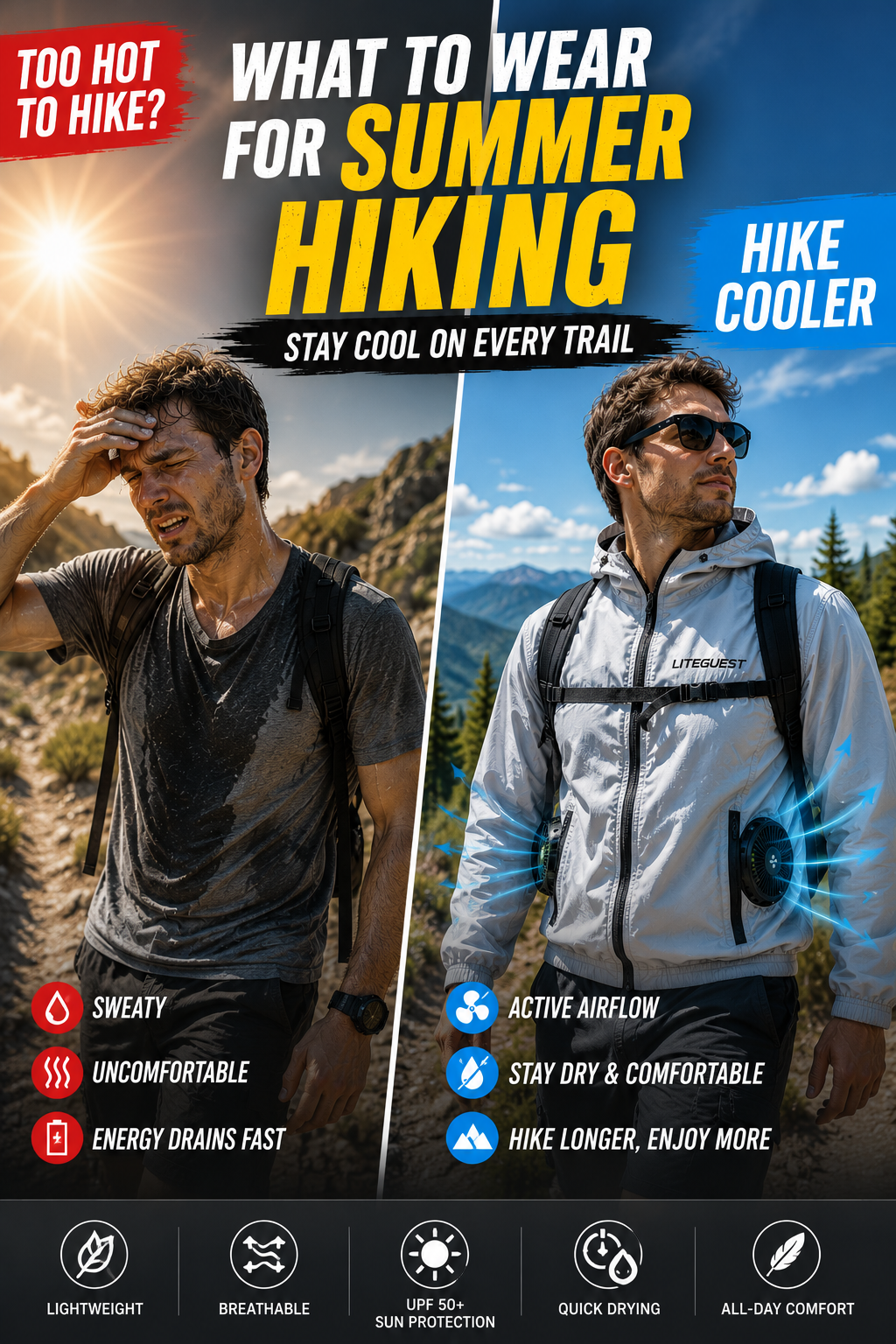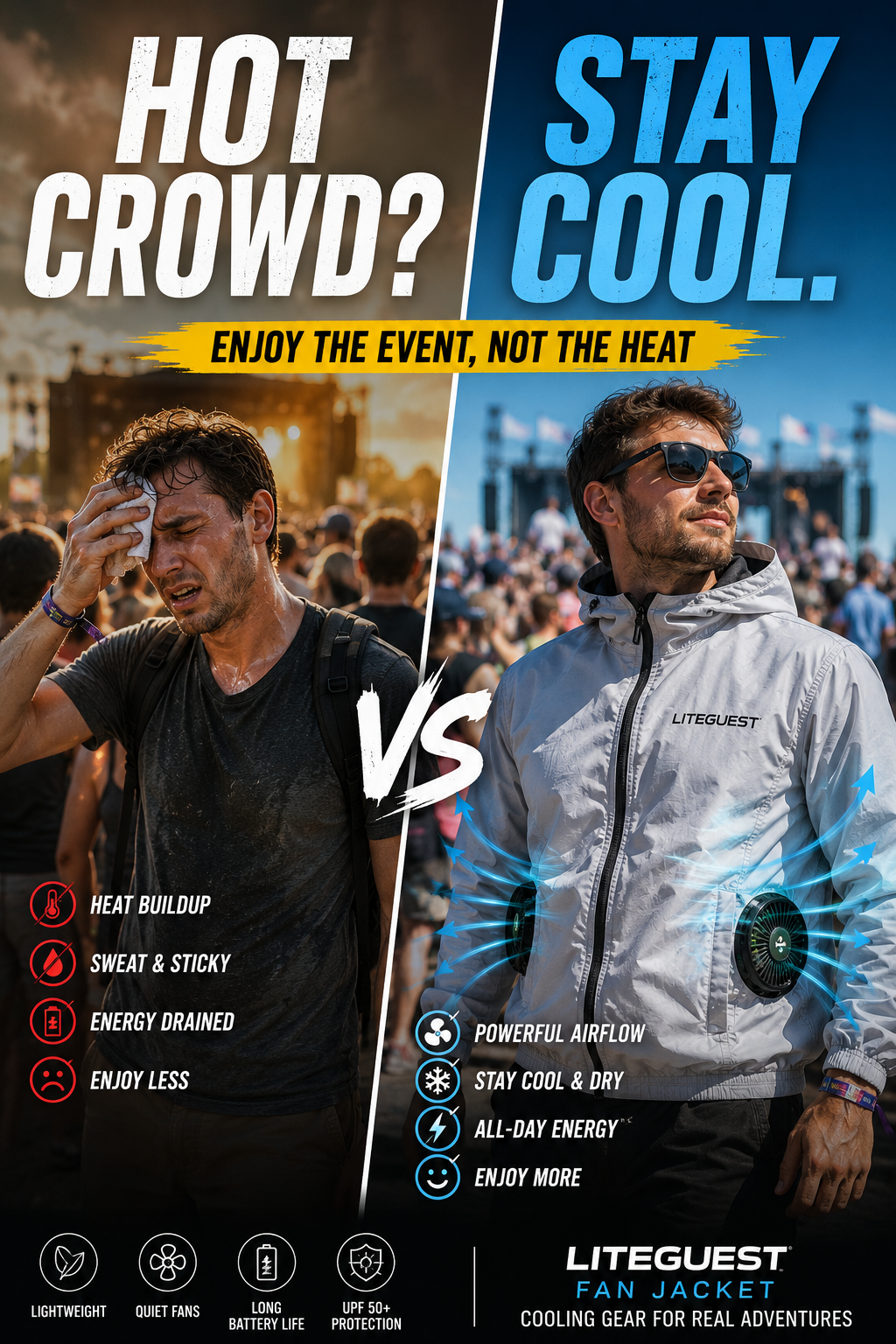

Most people think lightweight outdoor clothing is enough for hot weather.
Until they spend hours outside.
That’s when regular clothing starts to fail:
- Sweat builds up
- Heat gets trapped
- Air stops moving
And suddenly, “breathable” doesn’t feel breathable anymore.
So what makes cooling gear different?
The answer is simple:
Regular outdoor clothing helps manage heat.
Cooling gear actively fights it.
1. Regular Outdoor Clothing Is Passive


Most outdoor clothing relies on:
- Thin fabrics
- Moisture-wicking materials
- Ventilation panels
These features help reduce discomfort—but they don’t actually cool your body.
Once temperatures rise:
- Fabric becomes damp
- Heat accumulates
- Airflow decreases
This is why many people still feel exhausted in “summer-ready” clothing.
2. Cooling Gear Uses Active Airflow

Cooling gear works differently.
Instead of waiting for heat to escape naturally, it actively moves air around your body.
This helps:
- Reduce heat buildup
- Improve sweat evaporation
- Keep your body feeling drier
- Maintain comfort longer
The difference becomes especially noticeable during:
- Hiking
- Festivals
- Camping
- Outdoor work
- Fishing
3. Comfort Changes Everything Outdoors
Many people underestimate how much heat affects performance and mood.
When your body overheats:
- Energy drops faster
- Fatigue increases
- Outdoor activities become less enjoyable
Cooling gear isn’t just about comfort—it helps you stay active longer.
4. Why More Outdoor Enthusiasts Are Switching

As summers become hotter, more outdoor enthusiasts are looking beyond traditional apparel.
They want:
- Better airflow
- Less sweat buildup
- More comfort during long outdoor sessions
That’s why wearable cooling technology is becoming increasingly popular in outdoor lifestyles.
5. Which One Is Right for You?
Regular Outdoor Clothing
Best for:
- Mild weather
- Short outdoor sessions
- Casual use
Cooling Gear
Best for:
- High temperatures
- Long outdoor exposure
- Active movement
- Summer adventures
- Outdoor work and events
Regular outdoor clothing helps—but only to a certain point.
When temperatures rise and exposure lasts for hours, active cooling can make a major difference in comfort and performance.
The goal isn’t just surviving the heat.
It’s enjoying the outdoors without feeling drained by it.