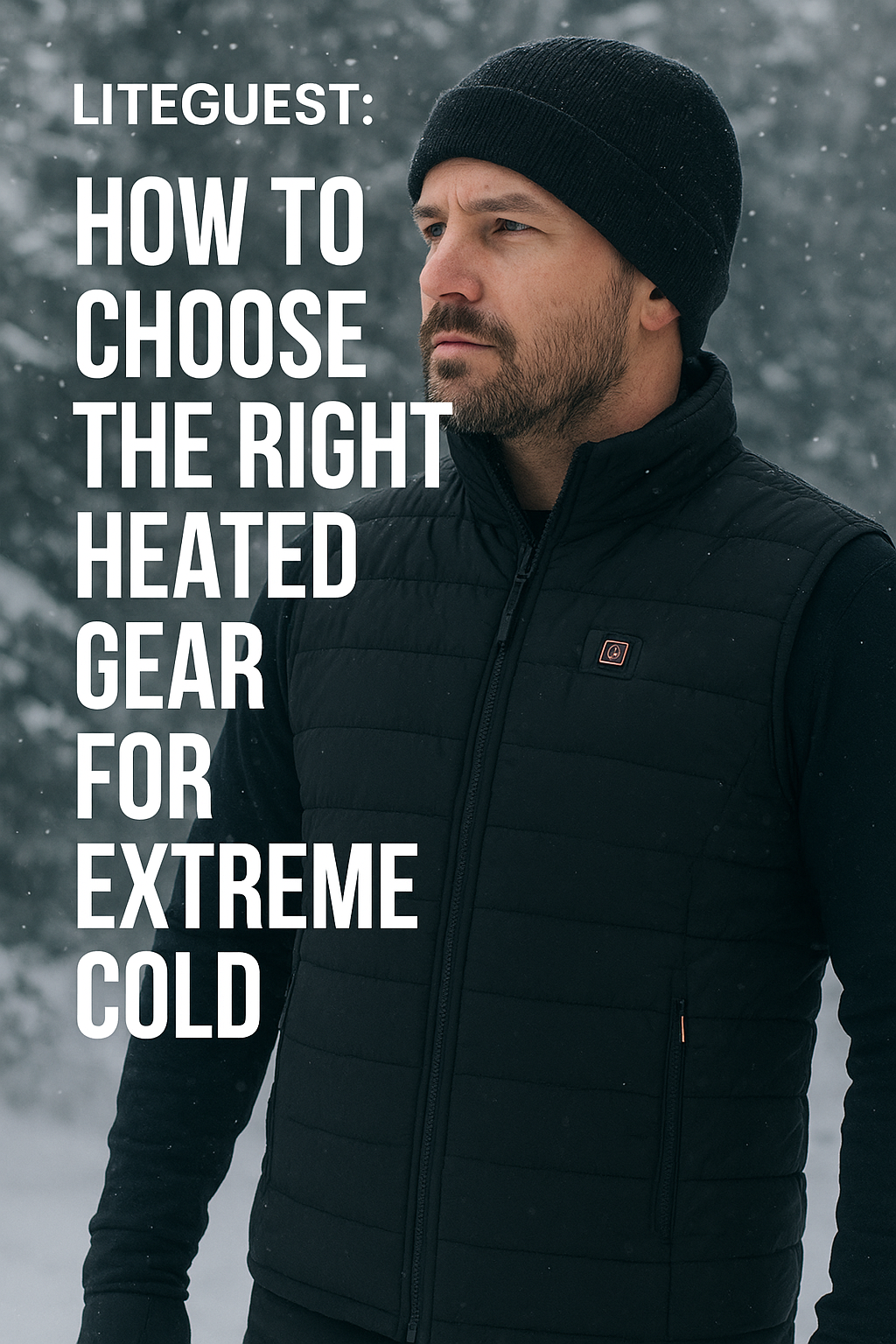

Heated clothing has become essential gear for hikers, campers, anglers, golfers, bikers, and anyone who spends extended time outdoors in cold weather. Yet as heated vests gain popularity, questions about electrical safety, overheating, battery risks, and usage in rain or snow naturally arise.
The good news?
Modern heated vests, especially from reputable brands like LITEGUEST, are engineered with multiple layers of safety protection—making them extremely safe for everyday use.
This guide breaks down exactly why heated vests are safe, what technologies protect you, and how to use them correctly for the best performance.
1. How Heated Vests Work
To understand safety, it’s important to understand the technology inside the vest.
Most high-quality heated vests—including all LITEGUEST models—use:
✔ Low-voltage carbon-fiber heating elements
These fibers heat gradually and evenly, without “hot spots.”
✔ UL-certified power bank compatibility
LITEGUEST heated vests run on 5V USB power banks—similar to what you use for phones.
✔ 3–5 adjustable heat levels
Users can control warmth depending on activity and outdoor conditions.
✔ Overheat protection chips
Sensors regulate temperature and automatically shut down if excessive heat is detected.
✔ Water-resistant insulation layers
To ensure safe operation in snow flurries and light rain.
This blend of materials and low-voltage power makes the system inherently safe.
2. Are Heated Vests Actually Safe?
The answer is YES—when designed with proper safety standards.
LITEGUEST heated vests follow internationally recognized certification processes, including:
-
CE compliance
-
FCC certification
-
RoHS material safety
-
UL-listed battery components
These certifications ensure that the vest’s electrical components operate within strict safety limits.
Why low voltage matters
LITEGUEST vests operate at 5 volts—far lower than household electrical outlets.
At this voltage level, the power is strong enough to heat the vest but far too low to pose shock risks.
Why carbon fiber is safer than metal wires
Carbon fiber elements are flexible, durable, and non-conductive to spark hazards.
They heat evenly, reducing the risk of burns or localized overheating.
Built-in safety protections include:
-
Overheat shutoff
-
Temperature control sensors
-
Short-circuit protection
-
Battery discharge protection
-
Waterproof-rated heating elements
In short: LITEGUEST heated vests are engineered to be safe, stable, and dependable.
3. Common Concerns About Heated Vests
❌ Concern #1: Heated vests can catch fire
Truth:
Properly manufactured heated vests do not ignite. Carbon fiber does not spark or produce open flame, and system voltage is too low for fire risk.
❌ Concern #2: Using power banks is dangerous
Truth:
Only extremely poor-quality batteries pose risks.
LITEGUEST vests are designed for use with UL-listed power banks, which include built-in protection circuits.
❌ Concern #3: Wearing a heated vest in the rain is unsafe
Truth:
The vest’s heating elements are sealed and water-resistant. Combined with low voltage, it is safe in:
-
light rain
-
wet snow
-
fog
-
outdoor sweat conditions
(Always avoid full submersion.)
❌ Concern #4: Heated vests can overheat your body
Truth:
Temperature sensors regulate the heating levels, and the vest stops heating if abnormal heat is detected.
❌ Concern #5: Heated vests interfere with medical devices
Truth:
Low-voltage heating elements are unlikely to interfere, but people with pacemakers should consult doctors as a precaution.
4. Who Benefits Most from Heated Vests?
LITEGUEST heated vests are ideal for:
Outdoor lifestyle users:
-
hikers
-
skiers
-
snowboarders
-
golfers
-
hunters
-
cyclists
-
anglers
-
campers
Cold-weather professions:
-
construction workers
-
warehouse staff
-
delivery drivers
-
traffic directors
-
security personnel
Everyday winter wear:
-
commuters
-
travelers
-
seniors
-
people with poor circulation or cold sensitivity
Heated vests provide core warmth—resulting in warmer hands, better mobility, and increased comfort in cold environments.
5. Safety Tips for Using a Heated Vest
Even though LITEGUEST heated vests are inherently safe, following these best practices ensures optimal performance:
✔ Use only certified (UL-listed) power banks
Cheap batteries from unknown brands are not recommended.
✔ Never wash the vest with the battery connected
Remove the power bank before any cleaning.
✔ Follow the correct cleaning method
Most LITEGUEST vests support:
-
machine wash (with laundry bag)
-
gentle cycle
-
hang dry only
✔ Avoid bending the heating areas sharply
This keeps the carbon fiber elements protected.
✔ Do not use when the heating area is visibly damaged
Stop using immediately if wires appear exposed (rare but possible).
✔ Turn off heating when entering warm indoor environments
Extends battery life and prevents unnecessary heat.
6. Are Heated Vests Safe for Seniors and Kids?
Seniors:
Yes.
The gentle heating improves circulation and comfort, but they should avoid prolonged use at the highest temperature.
Kids:
Safe when used under supervision.
Children should use lower heat levels and avoid wearing the vest during vigorous play.
People with medical conditions:
Those with sensory issues, impaired feeling, or pacemakers should consult a doctor before use.
7. What to Look for When Choosing a Safe Heated Vest
To ensure maximum safety, choose heated vests with:
-
Certified heating elements
-
UL-listed battery compatibility
-
Carbon fiber wiring
-
Temperature control levels
-
Water-resistant fabrics
-
Overheat protection sensors
-
Strong brand reputation
-
Positive customer reviews
LITEGUEST heated vests meet all of these standards.
Heated vests have become an essential part of modern outdoor gear—and when designed with advanced safety systems, they are extremely safe to use.
LITEGUEST heated vests combine low-voltage operation, carbon-fiber heating, safety certifications, and protective circuitry to deliver warmth without risk.
Whether you're hiking, working outdoors, or simply trying to stay warm during winter, a high-quality heated vest provides comfort, efficiency, and dependable safety all season long.