
May is when outdoor season really begins.
The weather feels perfect—until it doesn’t.
Many popular outdoor activities can quickly turn uncomfortable due to rising temperatures, strong sun exposure, and limited airflow.
If you’ve ever felt drained, sweaty, or overheated outside in late spring, you’re not alone.
Here are five outdoor activities that get hotter than expected—and what you can do about it.
1. Hiking in Direct Sunlight


Hiking may feel refreshing at first, but once you’re exposed to direct sunlight for extended periods, heat builds up quickly.
Why it gets hot:
- Continuous movement raises body temperature
- Limited shade on open trails
- Backpack traps heat on your back
What helps:
- Lightweight clothing is good
- But active airflow (like fan-assisted jackets) helps reduce heat buildup significantly
2. Fishing Under Open Sky


Fishing is one of the most underestimated “heat trap” activities.
Why it gets hot:
- Little to no shade
- Long periods of sitting under sun
- Reflection from water increases heat exposure
What helps:
- UV protection is important
- Cooling gear can make long sessions much more comfortable
3. Music Festivals & Outdoor Events


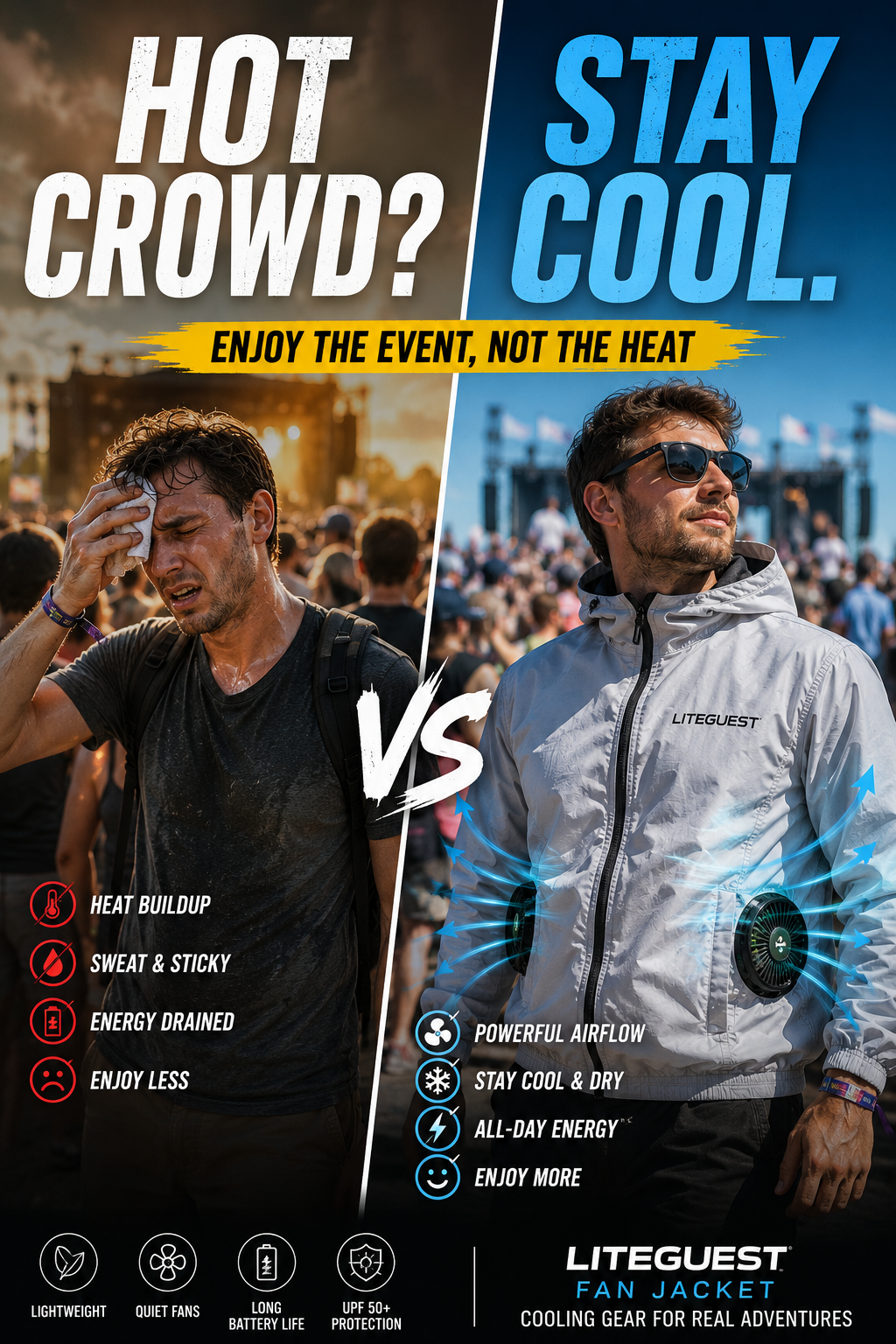
Standing in a crowd with little airflow? That’s a perfect recipe for overheating.
Why it gets hot:
- High density of people
- Limited airflow
- Long standing time
What helps:
- Breathable clothing
- Portable cooling solutions (fan gear, cooling towels)
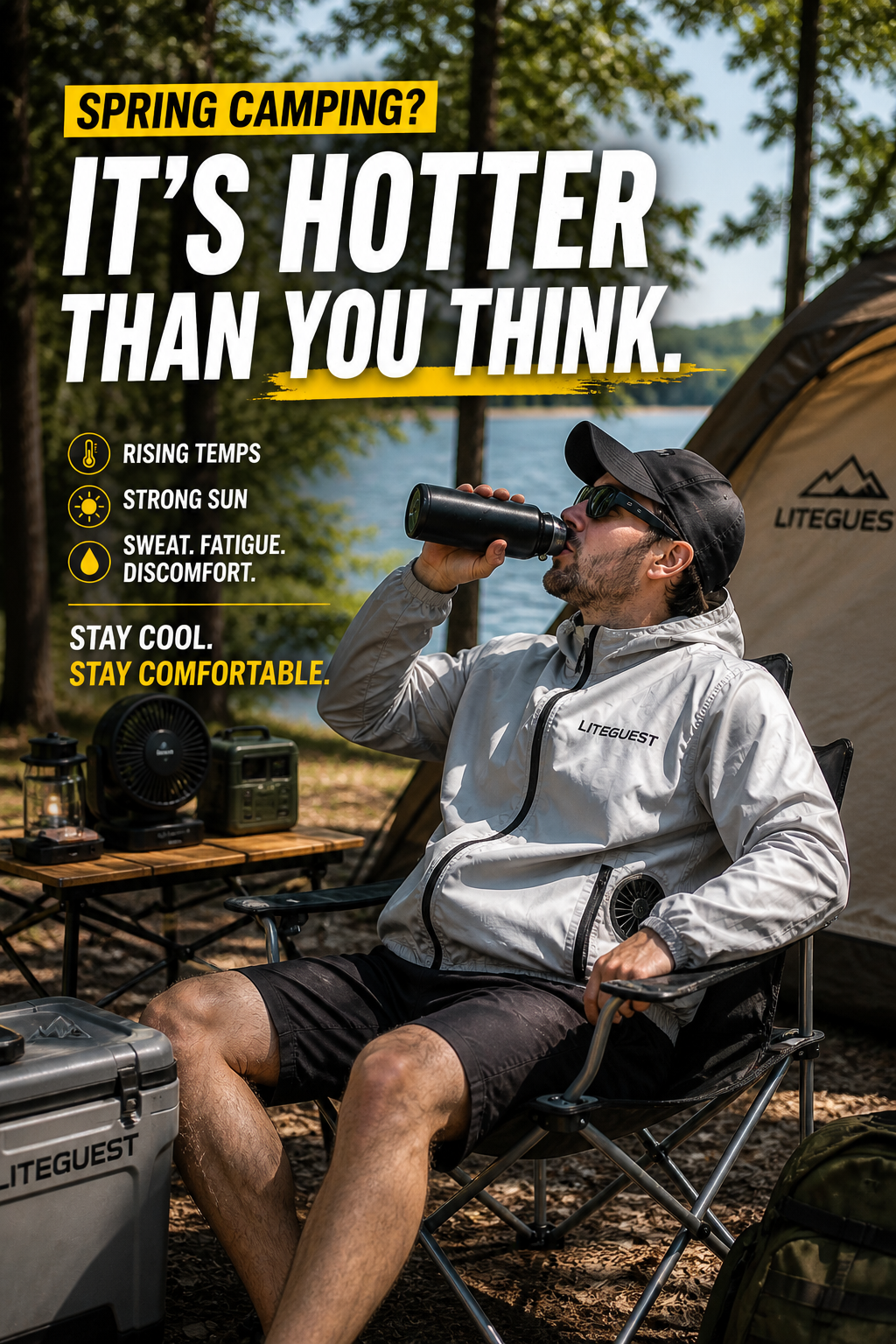
4. Camping Setup & Midday Activities


Ironically, the hardest part of camping is often setting up camp.
Why it gets hot:
- Physical work under direct sun
- No shade early on
- Constant movement
What helps:
- Start early or late
- Use gear that keeps airflow moving while active
5. Backyard & Outdoor Work


From mowing the lawn to yard maintenance, these everyday tasks can feel exhausting in May heat.
Why it gets hot:
- Physical effort
- Direct sunlight
- Heat reflection from surfaces
What helps:
- Hydration
- Wearing gear designed for heat management
How to Stay Cool No Matter the Activity


No matter what you’re doing outdoors, heat management is key.
✔ Use Active Cooling Instead of Passive Cooling
Breathable fabrics help—but they don’t actively reduce heat.
Cooling gear that circulates air or lowers body temperature provides a noticeable difference in comfort.
✔ Plan Around Heat Peaks
Try to avoid outdoor activity during peak sun hours (12–3 PM).
✔ Stay Ahead of Hydration
Drink water consistently—not just when you feel thirsty.
Stay prepared—and stay cool.
May is the start of outdoor season—but it’s also when heat begins to catch people off guard.
From hiking to fishing to everyday outdoor work, many activities become uncomfortable faster than expected.
The difference between a great experience and an exhausting one often comes down to how well you manage heat.