
Outdoor Sports in Extreme Heat: How Athletes and Fans Stay Cool
Summer is the peak season for outdoor sports.
It's also becoming one of the hottest times of the year.
Whether you're attending a FIFA World Cup match, playing soccer, hiking in the mountains, or watching a baseball game, extreme heat can significantly affect both performance and comfort.
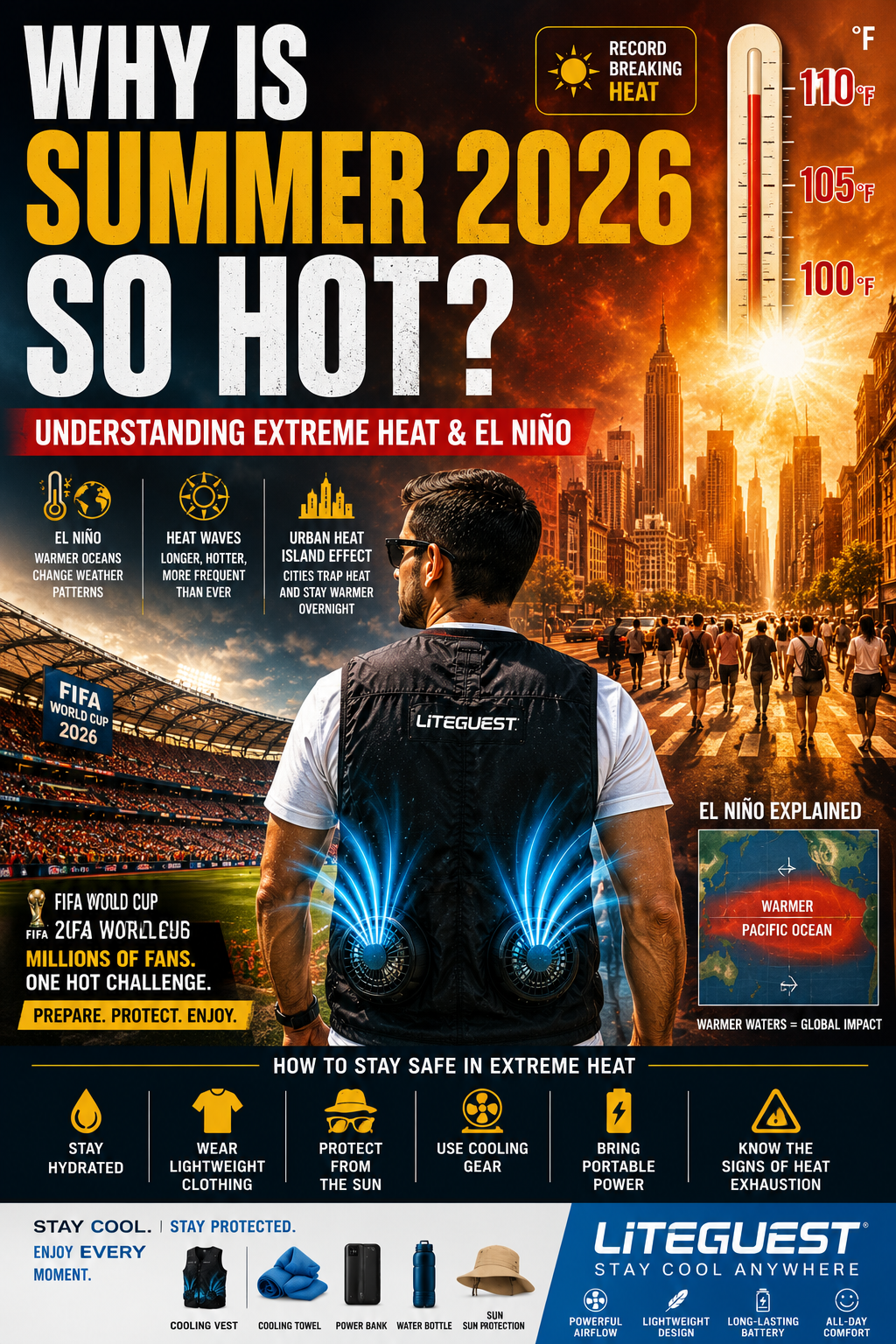
Heat waves are becoming more frequent across North America, and outdoor sports participants are feeling the impact.
Fortunately, modern cooling strategies can help athletes and fans stay comfortable, energized, and safe.
Why Heat Is a Growing Concern in Outdoor Sports
Most people think of sports injuries as:
- Sprains
- Strains
- Muscle fatigue
However, heat-related illness is becoming one of the biggest threats during summer events.
When body temperature rises faster than it can cool itself, problems begin.
Common symptoms include:
- Excessive sweating
- Headaches
- Dizziness
- Fatigue
- Nausea
- Muscle cramps
If ignored, these symptoms can progress into heat exhaustion or heat stroke.
This is why professional teams, event organizers, and outdoor enthusiasts now place greater emphasis on heat management.
Sports Most Affected by Extreme Heat
Soccer
Soccer players can cover:
- 7–10 miles per match
Fans may spend:
- 6–10 hours outdoors
During tournaments such as the FIFA World Cup, heat management becomes critical for both players and spectators.
Baseball
Baseball games often last:
- 3–4 hours
Many stadium seats remain exposed to direct sunlight for much of the game.
This creates ideal conditions for dehydration.
Hiking
Hikers face additional challenges:
- Elevation changes
- Limited shade
- Long exposure times
Heat stress is one of the most common reasons outdoor adventures become dangerous.
Camping
Summer camping trips often involve:
- Hiking
- Fishing
- Outdoor cooking
- Sporting activities
Without proper cooling strategies, discomfort can quickly accumulate throughout the day.
The Science of Staying Cool
The human body cools itself primarily through sweating.
As sweat evaporates, heat leaves the skin.
Problems occur when:
- Humidity is high
- Airflow is limited
- Hydration is inadequate
The goal of every cooling strategy is simple:
Help the body remove heat more efficiently.
Strategy #1: Hydration
Hydration remains the foundation of heat management.
Many people wait until they feel thirsty.
Unfortunately, thirst often appears after dehydration has already begun.
Best Practices
✔ Drink water regularly
✔ Increase intake during outdoor activities
✔ Use electrolyte supplements when sweating heavily
Why Electrolytes Matter
Sweat contains important minerals:
- Sodium
- Potassium
- Magnesium
Replacing these nutrients helps maintain:
- Muscle function
- Energy levels
- Temperature regulation
Strategy #2: Wear the Right Clothing
Clothing directly affects body temperature.
Choose
✔ Lightweight fabrics
✔ Moisture-wicking materials
✔ Breathable designs
✔ Light colors
Avoid
❌ Heavy cotton
❌ Thick fabrics
❌ Dark clothing
Modern performance apparel is specifically designed to improve airflow and reduce heat buildup.
Strategy #3: Use Cooling Gear
Cooling technology has advanced dramatically in recent years.
Today, athletes and fans have access to numerous cooling solutions.
Cooling Towels
Cooling towels remain one of the most affordable options.
Advantages:
- Portable
- Lightweight
- Easy to use
Neck Cooling Products
These focus on major heat-transfer areas around the neck.
Benefits:
- Fast cooling sensation
- Travel-friendly
Portable Fans
Rechargeable fans provide direct airflow.
Popular among:
- Spectators
- Travelers
- Festival attendees
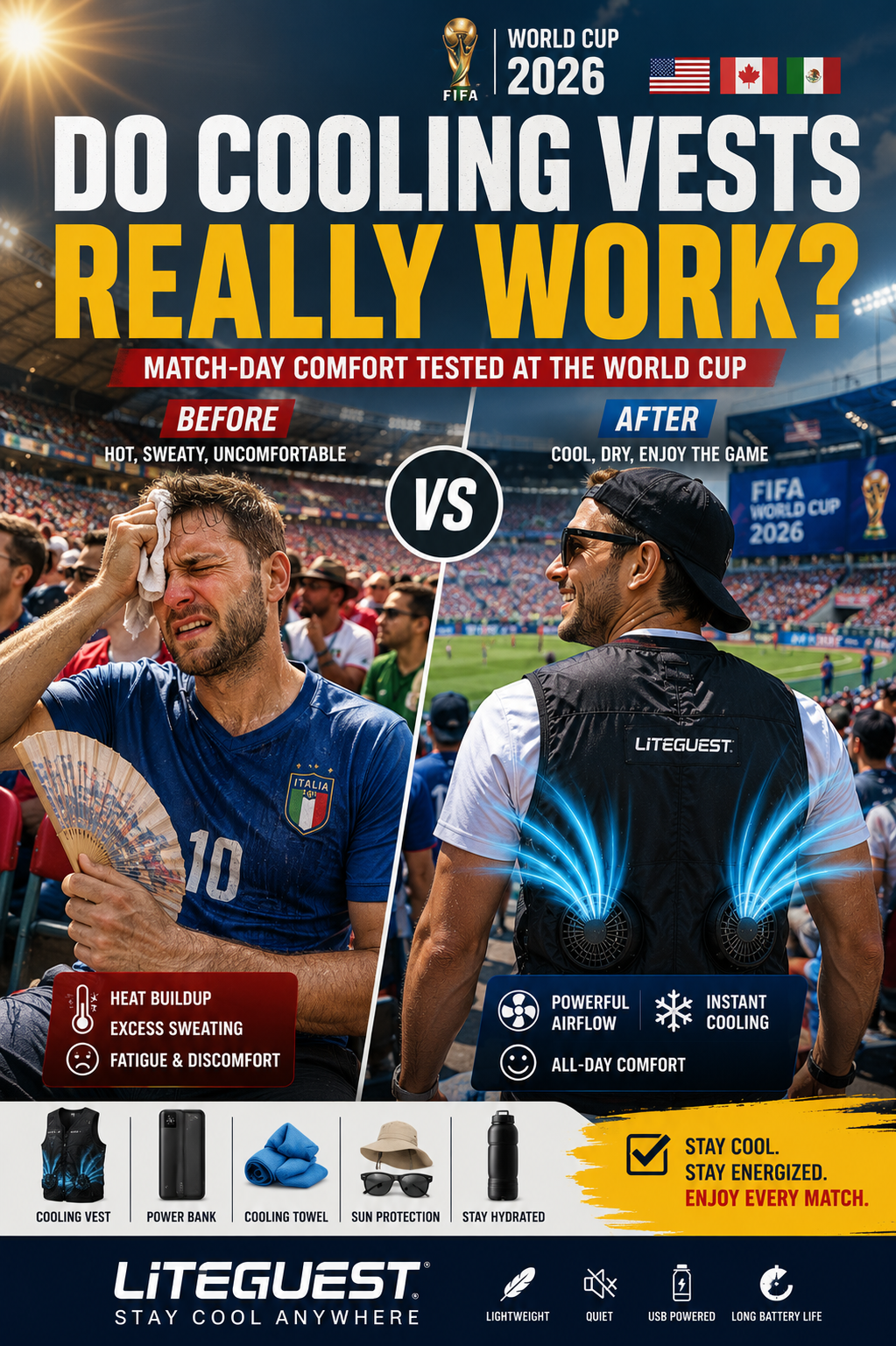
Fan Cooling Vests
Fan cooling vests have become increasingly popular among:
- Construction workers
- Outdoor athletes
- Campers
- Sports fans
Small electric fans circulate air throughout the garment.
Benefits include:
✔ Continuous airflow
✔ Reduced sweat buildup
✔ Long-duration cooling
✔ Improved comfort during prolonged outdoor exposure
Strategy #4: Reduce Sun Exposure
Direct sunlight dramatically increases heat stress.
Sun Protection Essentials
✔ Wide-brim hat
✔ Sunglasses
✔ Sunscreen
✔ UV-protective clothing
Even short periods of shade can help lower body temperature.
Strategy #5: Use Portable Power Wisely
Modern cooling products increasingly rely on rechargeable batteries.
This makes portable power banks essential.
Power banks can support:
- Smartphones
- Cooling vests
- Portable fans
- GPS devices
For all-day events, backup power becomes part of your cooling strategy.
How Professional Athletes Manage Heat
Elite athletes use multiple cooling techniques simultaneously.
Common methods include:
Pre-Cooling
Reducing body temperature before activity begins.
Active Cooling
Using cooling equipment during breaks.
Hydration Planning
Maintaining consistent fluid intake.
Recovery Cooling
Lowering body temperature immediately after exercise.
Interestingly, many of these same strategies can be adapted by spectators attending outdoor sporting events.
Warning Signs of Heat Exhaustion
Everyone participating in outdoor sports should recognize the early symptoms.
Watch for:
🚨 Excessive sweating
🚨 Dizziness
🚨 Weakness
🚨 Headache
🚨 Nausea
🚨 Rapid heartbeat
If symptoms appear:
- Move to shade.
- Drink water.
- Cool the body immediately.
- Seek medical attention if symptoms worsen.
Building the Ultimate Summer Sports Cooling Kit
Whether you're an athlete or a spectator, consider carrying:
Hydration
✅ Water Bottle
✅ Electrolyte Packets
Sun Protection
✅ Hat
✅ Sunglasses
✅ Sunscreen
Cooling Equipment
✅ Cooling Towel
✅ Fan Cooling Vest
Portable Power
✅ High-Capacity Power Bank
Together, these items provide protection against the most common heat-related challenges.
Why Cooling Technology Is Becoming More Important
Every year seems hotter than the last.
As outdoor sports continue to grow in popularity, demand for cooling apparel and portable cooling solutions continues to rise.
People are no longer relying solely on water and shade.
Instead, they're combining traditional heat-management techniques with modern cooling technology.
This trend is likely to continue for years to come.
Extreme heat doesn't have to ruin your outdoor sports experience.
Whether you're playing soccer, attending a World Cup match, hiking, camping, or enjoying a baseball game, preparation makes all the difference.
Hydration, proper clothing, cooling gear, and sun protection work together to help your body stay comfortable and safe.
By understanding how heat affects performance and using proven cooling strategies, athletes and fans can continue enjoying outdoor activities even during the hottest months of the year.
FAQ
How do athletes stay cool during extreme heat?
Athletes use hydration, cooling gear, lightweight clothing, shade, and recovery strategies to regulate body temperature.
Are cooling vests effective for outdoor sports?
Yes. Cooling vests help increase airflow and reduce heat buildup during extended outdoor activities.
What is the best cooling gear for sports fans?
Cooling towels, fan cooling vests, portable fans, water bottles, and power banks are among the most effective options.
How can I prevent heat exhaustion at sporting events?
Stay hydrated, avoid prolonged sun exposure, wear breathable clothing, and use cooling equipment when necessary.
Why are outdoor sports becoming more challenging in summer?
Rising temperatures and more frequent heat waves increase the risk of heat stress for both athletes and spectators.