
How to Stay Warm While Golfing in Cold Weather
Stay Comfortable. Keep Playing.
Category: Cold Weather Golf
Reading Time: 5 min read
Updated: September 2026
Outdoor Moment
The first tee time is early. The course is quiet, the fairways are open, and the morning air feels noticeably colder than it did a few weeks ago.
For many golfers, cooler weather does not mean the end of the season. Fall can actually be one of the most enjoyable times to play, with fewer hot days and comfortable conditions once the sun comes up.
The challenge is staying warm between shots.
Golf combines movement with long periods of standing, waiting, and sitting in a golf cart. Your hands can get cold, your golf cart seat can feel icy, and changing temperatures can make the same round feel very different from the first hole to the last.
The good news? You do not need to give up comfort—or your swing—just because temperatures drop.
Quick Take
The best way to stay warm while golfing in cold weather is to combine smart layering with targeted heated gear.
A practical cold-weather golf setup can include:
- Base layer for flexible insulation
- Heated vest for targeted core warmth
- Heated golf cart seat cushion for warmth while sitting
- Heated gloves for cold hands
- Wind-resistant outer layer for changing conditions
- Portable power bank for compatible heated gear
The goal is to stay warm without wearing so many bulky layers that your movement or swing feels restricted.
Why Golf Feels Colder in Fall
Golf can feel colder than expected because you are constantly switching between activity and inactivity.
Early Tee Times
Morning temperatures can be significantly cooler than the afternoon.
An early tee time may begin in chilly conditions before the sun has had a chance to warm the course.
Wind on the Course
Golf courses are often exposed to wind, particularly on open fairways and around water.
Even when the temperature seems manageable, wind can make you feel colder while standing or riding between holes.
Sitting Between Shots
This is one of the biggest differences between golf and more continuously active outdoor sports.
You may walk or swing for a short period, then spend several minutes sitting in a golf cart.
That lack of movement can make the cold much more noticeable.
Changing Temperatures
A round can begin cold, become comfortable around midday, and turn chilly again as the afternoon progresses.
Your clothing and heated gear should be flexible enough to adapt.
6 Ways to Stay Warm While Golfing

1. Dress in Layers
Layering is one of the easiest ways to handle changing golf weather.
A simple setup can be:
Base Layer → Heated Vest → Outer Layer
You can remove or add an outer layer as conditions change without having to completely change your outfit.
For golf, avoid unnecessary bulk around the shoulders and arms so your swing remains comfortable.
2. Keep Your Core Warm
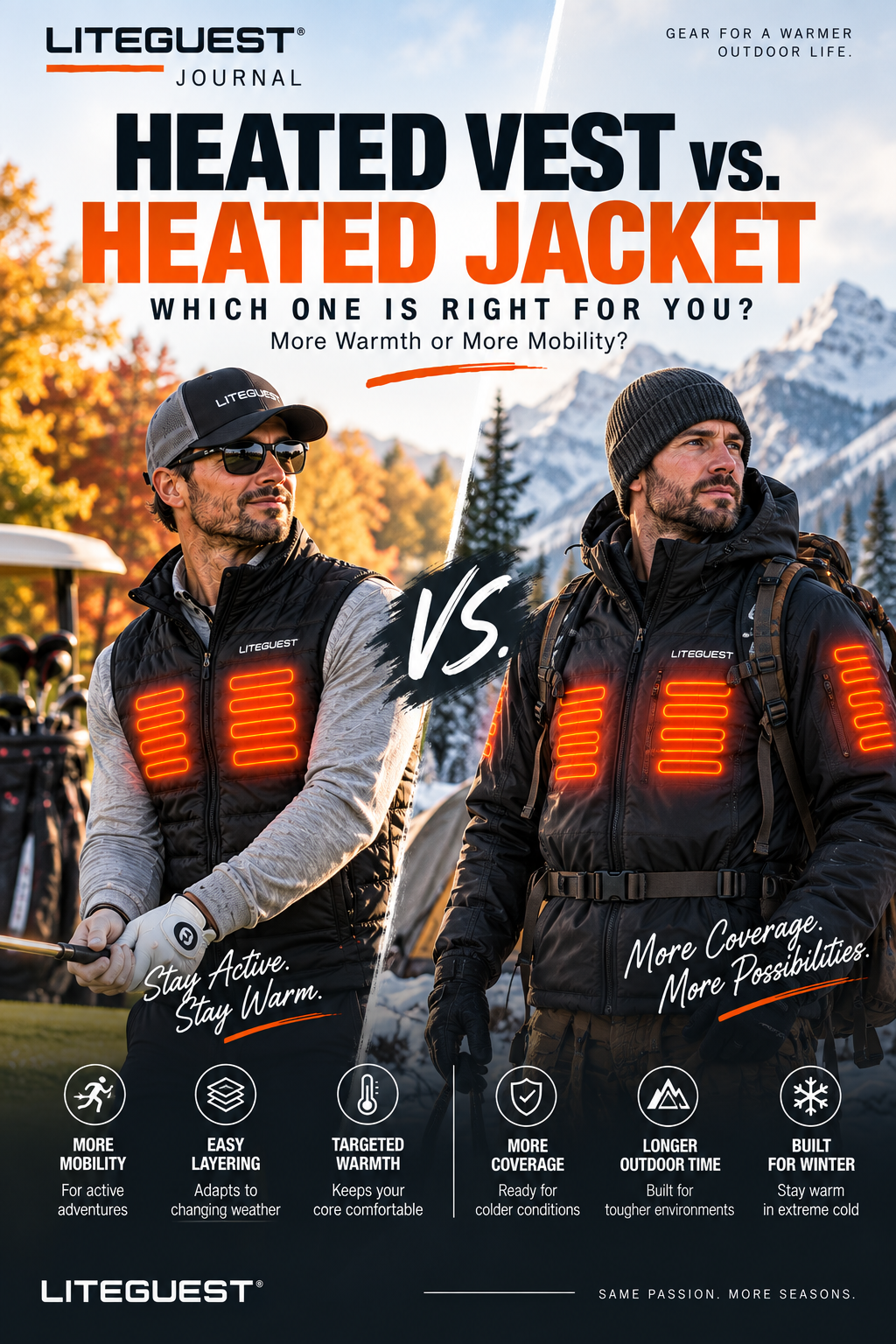
A heated vest is a useful option for golfers because it provides targeted warmth around the core while leaving your arms relatively unrestricted.
This can be especially helpful during early tee times or cool-weather rounds.
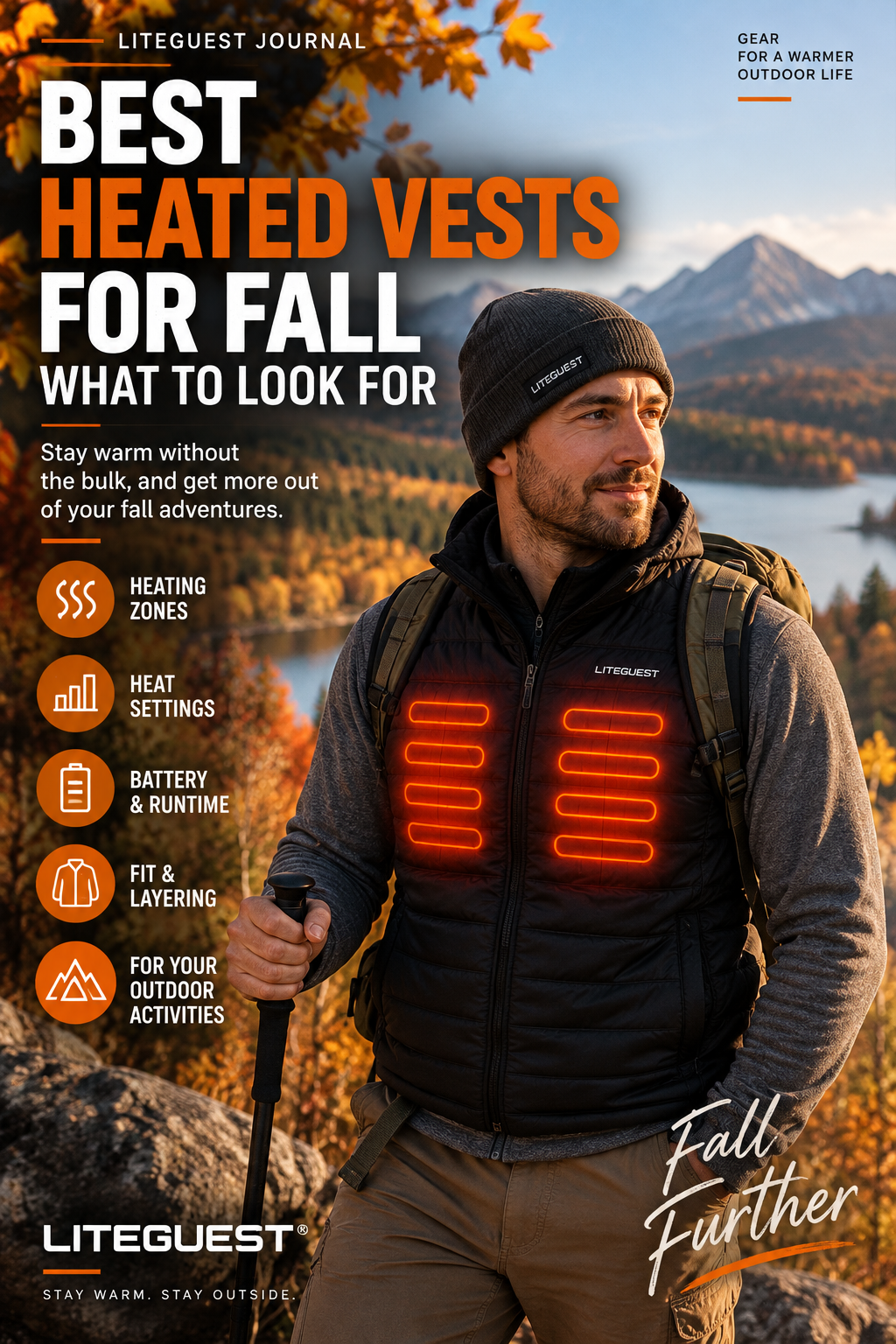
Look for a vest with comfortable fit, adjustable heat settings, suitable heating coverage, and a power source that matches the length of your round.
For more information on choosing a heated vest, see:
Best Heated Vests for Fall: What to Look For
3. Keep Your Hands Warm
Cold hands can make golf uncomfortable and may affect how you handle your club.
Heated gloves can provide targeted warmth when temperatures drop, particularly during early mornings or extended periods outdoors.
However, golfers should also consider dexterity and grip. The warmest glove is not necessarily the best choice if it makes it difficult to hold and control the club comfortably.
4. Warm Your Golf Cart Seat
Your upper body may be protected by several layers, but sitting on a cold golf cart seat for hours can still make a round uncomfortable.
A heated golf cart seat cushion provides targeted warmth where you are actually sitting.
This can be particularly useful because golf involves repeated transitions:
Swing → Walk → Sit → Wait → Swing
A heated seat cushion can add warmth during the sitting portions of your round without adding bulky clothing or restricting your swing.
For golfers who regularly play in cooler weather, it can be one of the simplest additions to a cold-weather golf setup.
5. Bring Reliable Power
Portable heated gear depends on a reliable power source.
Before heading to the course, check the battery level and make sure your power source is compatible with your heated vest, gloves, or other gear.
For longer rounds, a compact high-capacity power bank can provide additional flexibility.
Keeping your power source in a convenient pocket or golf bag compartment also makes it easier to manage during the round.
6. Adjust Your Gear During the Round
Do not assume the gear you need on the first tee will be exactly what you need on the 15th hole.
If the morning is especially cold, you may use a higher heat setting and an additional outer layer.
As the temperature rises, you can reduce the heat level or remove the outer layer.
Later in the round, when temperatures begin to fall again, you can adjust accordingly.
The advantage of heated gear is flexibility.
Best Heated Gear for Cold-Weather Golf
| Gear | Why It Helps |
|---|---|
| Heated Vest | Provides targeted core warmth while allowing arm movement |
| Heated Golf Cart Seat Cushion | Adds warmth while sitting between shots |
| Heated Gloves | Provides targeted warmth for cold hands |
| Power Bank | Helps keep compatible heated gear powered |
| Base Layer | Adds lightweight insulation |
| Outer Layer | Provides additional protection from wind and cold |
A combination of these items can be more practical than relying on one heavy winter layer.
Build Your Cold-Weather Golf Setup
Light Cold
Base Layer + Heated Vest
A simple setup for cooler mornings when you still expect to be active.
Chilly Morning
Base Layer + Heated Vest + Heated Golf Cart Seat Cushion
This combination addresses both active and seated parts of your round.
Colder Conditions
Base Layer + Heated Vest or Jacket + Heated Seat Cushion + Heated Gloves
For colder conditions, additional layers and accessories can provide broader coverage.
Always adjust your clothing to the actual weather and your personal comfort level.
Cold-Weather Golf Checklist
Before leaving for the course, consider packing:
✓ Base Layer
✓ Heated Vest
✓ Heated Golf Cart Seat Cushion
✓ Heated Gloves
✓ Wind-Resistant Outer Layer
✓ Portable Power Bank
✓ Extra Golf Gloves
✓ Weather-Appropriate Accessories
A little preparation can make a noticeable difference during an early or late-season round.
Key Takeaways
- Layering helps you adapt to changing temperatures throughout a golf round.
- A heated vest provides targeted core warmth while allowing comfortable arm movement.
- A heated golf cart seat cushion can add warmth during the many periods you spend sitting between shots.
- Heated gloves can help keep your hands comfortable in colder conditions.
- Portable power is important when using heated gear for several hours.
- The best cold-weather golf setup balances warmth, mobility, and comfort.
LITEGUEST Pro Tip
Don't just prepare for the temperature—prepare for the time you spend sitting.
Golf is different from many outdoor activities because your body alternates between movement and rest:
Move → Stop → Sit → Move → Stop → Sit
That is why a cold-weather golf setup should consider both your body and your golf cart.
A heated vest can keep your core comfortable while you move, while a heated golf cart seat cushion can provide targeted warmth when you sit down.
Gear We Trust
LITEGUEST Heated Golf Cart Seat Cushion
A practical way to add warmth during the sitting portions of a cool-weather golf round without restricting movement.
LITEGUEST Heated Vests
A versatile heated apparel option for providing targeted core warmth while maintaining freedom of movement.
LITEGUEST Heated Gloves
Useful for golfers who want additional warmth for their hands during colder mornings and outdoor activities.
LITEGUEST 20,000mAh Ultra-Compact Power Bank
A portable power option for compatible USB-powered heated gear when additional power is useful during longer outdoor activities.
FAQs
How do you stay warm while golfing in cold weather?
Start with layers and add targeted heated gear based on your needs. A heated vest can provide core warmth, while a heated golf cart seat cushion can keep you comfortable during periods of sitting. Heated gloves and a wind-resistant outer layer can provide additional protection in colder conditions.
Is a heated vest good for golf?
Yes. A heated vest can be useful for golf because it provides targeted warmth around the core while keeping the arms relatively unrestricted. This allows golfers to stay warmer without adding excessive bulk around the shoulders and arms.
Are heated golf cart seat cushions worth it?
For golfers who regularly play in cool or cold weather, a heated golf cart seat cushion can be a useful addition. Golf involves frequent periods of sitting between shots, so targeted warmth on the seat can complement heated apparel and traditional layers.
Keep Playing as the Weather Cools
Cold weather does not have to mean putting your golf clubs away.
With the right combination of layers, heated apparel, and golf-specific gear, you can stay comfortable through cool mornings, windy fairways, and chilly rides between holes.
The key is to prepare for the entire round—not just the temperature when you arrive at the first tee.
Stay warm. Keep playing. Stay outside with LITEGUEST.