
Best Heated Vests for Fall: What to Look For
Stay Warm Without the Bulk
Category: Heated Apparel
Reading Time: 5 min read
Updated: September 2026
Outdoor Moment
The first cool morning of fall can catch you off guard.
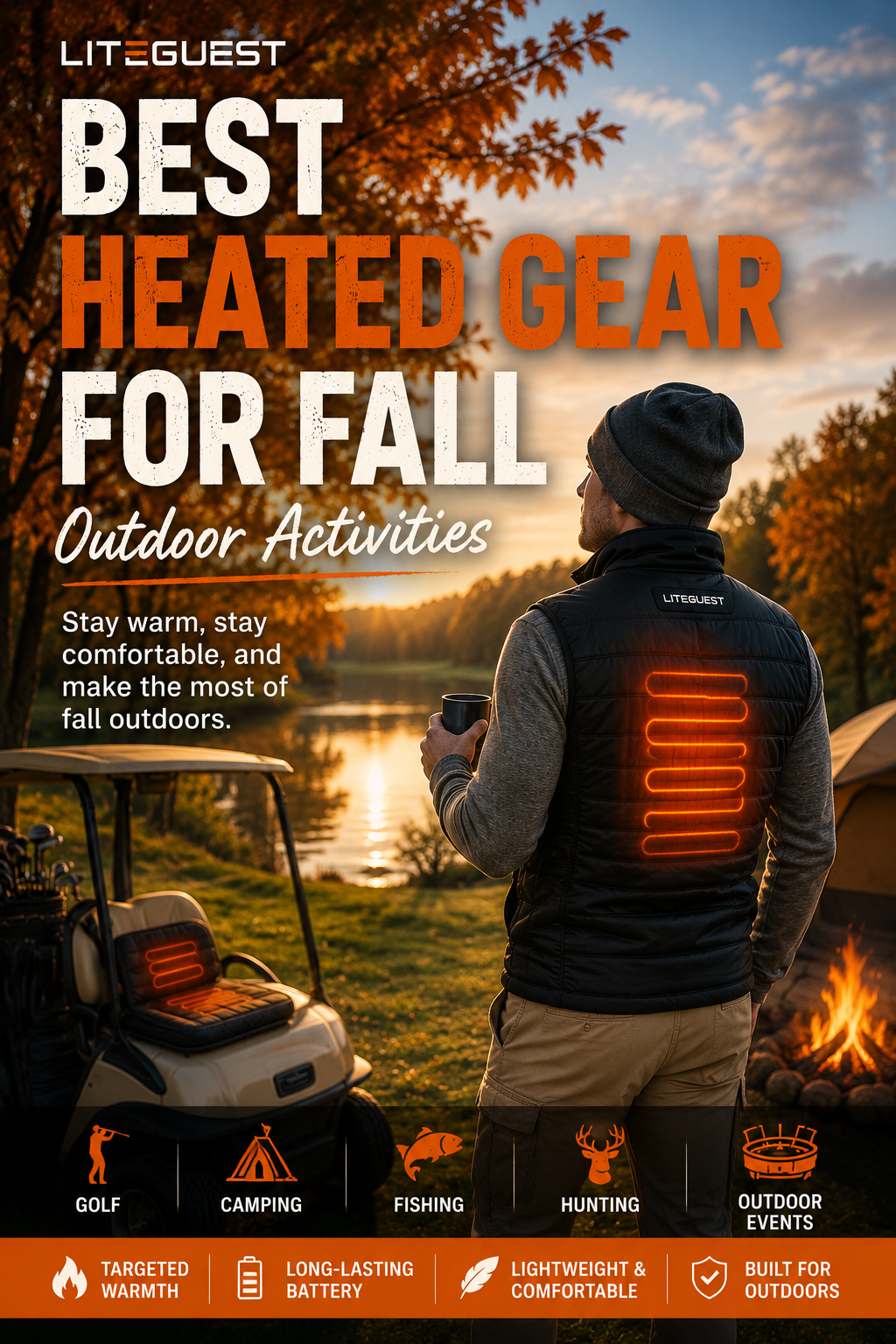
You may not need a heavy winter jacket yet, but a regular vest may not provide enough warmth when you're heading out before sunrise, sitting on a golf cart, fishing by the water, or spending an evening around the campsite.
That is where a heated vest can fit into your outdoor layering system.
Unlike a bulky winter coat, a heated vest adds targeted warmth around the core while keeping your arms relatively unrestricted. For active outdoor activities, that combination can make a heated vest one of the most versatile pieces of cold-weather gear to have in your fall kit.
But not every heated vest is the same.
Heating zones, heat settings, battery performance, fit, and layering all affect how useful a heated vest will be outdoors.
Quick Take
The best heated vest is not simply the one with the most heating zones or the highest heat setting.
Before choosing a heated vest, look at:
- Heating zones — Where the vest provides warmth
- Heat settings — How easily you can adjust warmth
- Battery and runtime — How long it can operate outdoors
- Fit — Whether it allows comfortable movement
- Layering — How well it works with your existing clothing
- Activity — Whether it suits golf, camping, fishing, hunting, or everyday outdoor use
A good heated vest should provide useful warmth while allowing you to move naturally.
What Makes a Good Heated Vest?
Heating Zones
Heating zones determine where warmth is delivered.
A vest may provide heating across the front, back, or other areas of the upper body. The right configuration depends on where you typically feel cold during your outdoor activities.
More heating zones are not automatically better.
What matters is whether the heated areas match your needs and provide useful coverage for the way you use the vest.
For example, a golfer may value core warmth without restricting arm movement, while someone spending long periods outdoors in colder conditions may prefer broader heating coverage.
Heat Settings
Fall weather can change throughout the day.
A cool morning may become comfortable by afternoon and then turn chilly again after sunset. Adjustable heat settings allow you to respond to those changes instead of relying on one fixed level of warmth.
Look for a heated vest with simple controls and multiple heat settings so you can adjust the warmth to match your activity and environment.
Battery and Runtime
A heated vest is only useful outdoors if its power source can support your activity.
Before choosing one, check:
- Battery compatibility
- Connection type
- Capacity
- Expected runtime
- Charging requirements
If you regularly spend several hours outdoors, a reliable power bank or additional battery can provide more flexibility.
For USB-powered heated gear, a portable power bank can also be useful for keeping your setup compact and easy to carry.
Fit and Mobility
Fit is especially important for heated apparel.
A vest should be comfortable enough to sit close to your body while still allowing natural movement.
This matters even more for activities such as golf, fishing, hiking, and hunting.
A golfer needs freedom of movement through the swing. An angler needs comfortable arm movement while casting and handling equipment. A hiker needs a vest that works naturally with a backpack and other layers.
The right fit should support your activity rather than get in the way of it.
Layering
One of the biggest advantages of a heated vest is its ability to work as part of a layering system.
A simple fall setup might look like:
Base Layer → Heated Vest → Outer Layer
On a mild day, you may only need a base layer and heated vest. When temperatures drop or wind increases, you can add an outer shell or jacket.
This flexibility makes heated vests particularly useful during transitional seasons when weather conditions can change quickly.
Best Heated Vest for Different Outdoor Activities
The best heated vest depends on what you actually do outdoors.
Golf
A heated vest can be useful for early tee times and cool-weather rounds because it provides core warmth while leaving your arms relatively unrestricted.
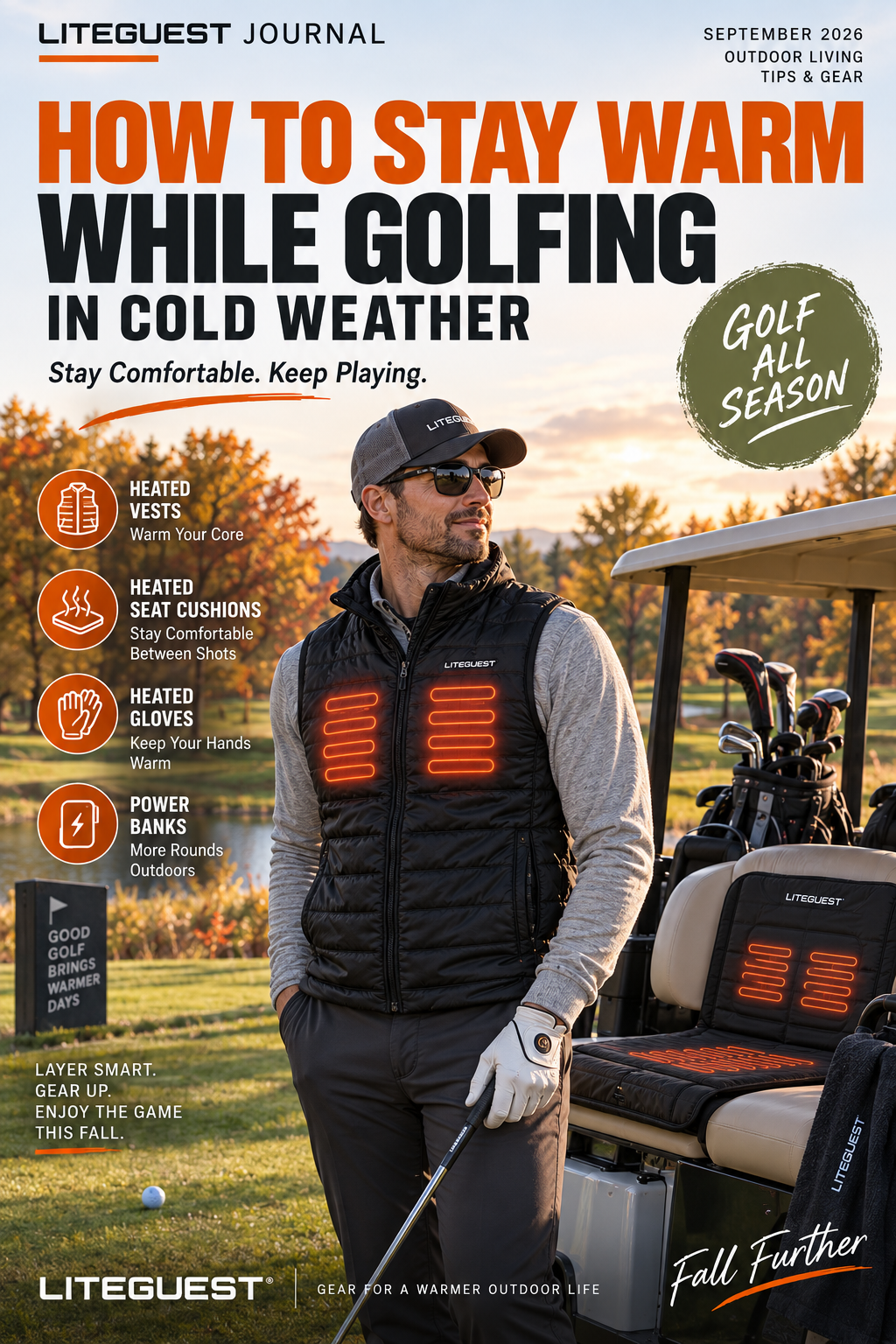
For golfers, consider pairing a heated vest with a heated golf cart seat cushion for additional warmth while sitting between shots.
Recommended Golf Setup:
✓ Heated Vest
✓ Base Layer
✓ Heated Golf Cart Seat Cushion
✓ Portable Power Bank
Camping
Fall camping often means comfortable afternoons followed by much colder mornings and evenings.
A heated vest can provide warmth while setting up camp, preparing food, walking around the campsite, or relaxing around a fire.
For overnight trips, it can be combined with heated blankets or sleeping mats for additional comfort.
Recommended Camping Setup:
✓ Heated Vest
✓ Base Layer
✓ Heated Blanket
✓ Heated Sleeping Mat
✓ Portable Power Source
Fishing
Fishing frequently involves long periods outdoors, especially during early mornings when temperatures are lower.
A heated vest provides warmth around the core while keeping your arms available for casting, handling equipment, and moving around the boat or shoreline.
Recommended Fishing Setup:
✓ Heated Vest
✓ Heated Gloves
✓ Weather-Appropriate Layers
✓ Portable Power Bank
Hunting
Hunters may spend extended periods outdoors with a combination of movement and stationary time.
A heated vest can provide targeted warmth while maintaining mobility. When conditions become colder or additional coverage is needed, a heated jacket may be a better option.
Recommended Hunting Setup:
✓ Heated Vest or Heated Jacket
✓ Heated Gloves
✓ Warm Outer Layer
✓ Portable Power Source
Everyday Outdoor Use
A heated vest is not limited to specialized outdoor activities.
It can also be useful for:
- Walking
- Outdoor work
- Watching sports
- Yard work
- Traveling
- Other cool-weather activities
If you regularly move between indoor and outdoor environments, adjustable heating and easy layering can be especially convenient.
Heated Vest vs. Traditional Vest
Both types of vests can be useful, but they provide warmth in different ways.
| Feature | Heated Vest | Traditional Vest |
|---|---|---|
| Warmth | Active, adjustable heat | Passive insulation |
| Heat control | Multiple settings on many models | No active heat control |
| Power | Requires a battery or power source | No power required |
| Layering | Can provide targeted warmth under layers | Depends on insulation and thickness |
| Best for | Changing outdoor conditions | Consistent conditions |
A traditional insulated vest can be an excellent choice when you simply need another passive layer.
A heated vest offers another option when you want adjustable, targeted warmth.
What to Check Before Buying a Heated Vest
Before choosing a heated vest, use this quick checklist:
✓ Heating Areas
Do the heating zones cover the areas where you need warmth?
✓ Heat Settings
Can you adjust the warmth as conditions change?
✓ Battery
Is the power source compatible with your needs?
✓ Runtime
Can it support the length of your typical outdoor activity?
✓ Fit
Can you move comfortably while wearing it?
✓ Layering
Can you wear it comfortably with your existing outdoor clothing?
✓ Activity
Does the design fit the way you actually spend time outdoors?
Fall Heated Vest Checklist
Golf
✓ Heated Vest
✓ Base Layer
✓ Heated Golf Cart Seat Cushion
✓ Power Bank
Camping
✓ Heated Vest
✓ Base Layer
✓ Heated Blanket
✓ Heated Sleeping Mat
Fishing
✓ Heated Vest
✓ Heated Gloves
✓ Outdoor Layers
✓ Power Bank
Hunting
✓ Heated Vest or Jacket
✓ Heated Gloves
✓ Warm Outer Layer
✓ Power Source
Key Takeaways
- A heated vest is one of the most versatile heated apparel options for fall.
- Look beyond the number of heating zones when comparing products.
- Heat settings allow you to adjust warmth as outdoor conditions change.
- Battery compatibility and runtime are important for longer activities.
- A comfortable fit should allow natural movement and easy layering.
- Heated vests work well for golf, camping, fishing, hunting, hiking, and everyday outdoor use.
- The best heated vest is the one that matches your activity and outdoor environment.
LITEGUEST Pro Tip
Don't choose a heated vest based on the highest heat setting alone.
Think about the complete experience:
Comfort + Heating Coverage + Battery + Fit + Activity
A vest that fits comfortably, works with your layers, and provides the right warmth for your activity can be more useful than one that simply offers the highest specifications on paper.
Gear We Trust
LITEGUEST Heated Vests
A versatile choice for adding targeted warmth during fall golf, fishing, camping, hiking, hunting, and everyday outdoor activities.
LITEGUEST 20,000mAh Ultra-Compact Power Bank
A portable power option for compatible USB-powered heated gear when you need additional power during longer outdoor activities.
LITEGUEST Heated Golf Cart Seat Cushion
A useful companion for golfers who spend extended periods sitting in a golf cart during cool-weather rounds.
LITEGUEST Heated Gloves
Targeted warmth for your hands during fishing, hunting, outdoor sports, and other cold-weather activities.
FAQs
What should I look for in a heated vest?
Focus on heating zones, heat settings, battery compatibility, runtime, fit, layering, and how well the vest matches your intended outdoor activity.
Are heated vests good for fall?
Yes. Heated vests are particularly useful in fall because they provide targeted warmth without the bulk of a heavy winter jacket. They can also be layered with other outdoor clothing as temperatures change.
What is the best heated vest for outdoor activities?
There is no single best heated vest for every activity. Golfers may prioritize mobility, campers may prioritize battery life and layering, while hunters and anglers may focus on warmth, comfort, and extended outdoor use. Choose a vest based on how and where you spend time outside.
Find the Right Heated Vest for Fall
A heated vest can be more than another layer in your closet. It can become a flexible part of your outdoor gear system for the entire fall season.
The right choice comes down to how you use it.
Look for practical heating coverage, adjustable warmth, reliable power, comfortable fit, and easy layering. Then match those features to your favorite outdoor activities.
Whether you're heading to the golf course before sunrise, setting up camp on a cool evening, fishing by the water, or preparing for hunting season, the right heated vest can help you stay comfortable as the season changes.
Stay warm. Stay outside.