
Heated Vest vs. Heated Jacket: Which One Is Right for You?
More Warmth or More Mobility?
Category: Heated Apparel
Reading Time: 5 min read
Updated: September 2026
Outdoor Moment
One cool fall morning, a heated vest may feel like exactly what you need.
A few weeks later, the temperature drops, the wind picks up, and you find yourself wondering whether a heated jacket would be a better choice.
Both can provide active warmth. But they are designed for slightly different situations.
A heated vest focuses on your core while leaving your arms relatively unrestricted. A heated jacket provides more overall coverage and can make more sense when you spend longer periods outdoors in colder conditions.
So which one should you choose?
The answer depends less on the product itself and more on how you move, how long you stay outside, and how you layer your clothing.
Quick Take
Choose a heated vest when you want targeted core warmth, mobility, and flexible layering. Choose a heated jacket when you need more overall coverage and protection in colder conditions.
A simple way to think about it:
More Mobility → Heated Vest
More Coverage → Heated Jacket
Your activity, weather conditions, and layering system should determine which option makes the most sense.
When a Heated Vest Makes More Sense
Better Mobility
A heated vest leaves your arms relatively free, making it useful for activities that involve frequent movement.
Golfers can swing comfortably without adding heated material around the arms. Hikers can move naturally, while anglers can cast and handle equipment without excessive bulk.
For active outdoor activities, that freedom can be a major advantage.
Easier Layering
A heated vest works naturally within a traditional layering system:
Base Layer → Heated Vest → Outer Layer
On a cool fall morning, you may only need the first two layers.
If the wind increases or temperatures drop, add an outer jacket.
This makes a heated vest particularly versatile during transitional seasons when conditions can change throughout the day.
Less Bulk
Because a vest does not cover the arms, it can feel less restrictive than a full heated jacket.
That can be useful when your activity requires a wide range of motion.
For golfers, hikers, cyclists, and other active users, mobility can be just as important as warmth.
When a Heated Jacket Makes More Sense
More Overall Coverage
A heated jacket extends warmth beyond the core and provides additional coverage around the upper body and arms.
That can be helpful when temperatures are lower or when you spend extended periods outside.
Better for Colder Conditions
When fall turns into winter, additional coverage can become more valuable.
A heated jacket can provide warmth across more of the body while also functioning as part of your outerwear system.
For colder environments, it may reduce the need to combine as many separate layers.
Long Periods Outdoors
A heated jacket can be particularly useful when you spend a long time outside with limited movement.
Examples include hunting, outdoor work, winter camping, and watching outdoor events.
When your activity involves more standing or sitting than continuous movement, additional coverage can make a noticeable difference in comfort.
Heated Vest vs. Heated Jacket
| Feature | Heated Vest | Heated Jacket |
|---|---|---|
| Core warmth | Excellent | Excellent |
| Overall coverage | Moderate | Higher |
| Arm mobility | Excellent | Good |
| Layering flexibility | Excellent | Moderate |
| Mild fall weather | Excellent | Good |
| Colder conditions | Good with layers | Excellent |
| Golf | Excellent | Good |
| Hiking | Excellent | Good |
| Fishing | Excellent | Good |
| Hunting | Good | Excellent |
| Camping | Good | Excellent |
| Outdoor work | Good | Excellent |
Neither option is universally better.
The difference is mainly about coverage, mobility, and how you plan to use the garment.
Which One Is Better for Your Activity?
Golf
Heated Vest
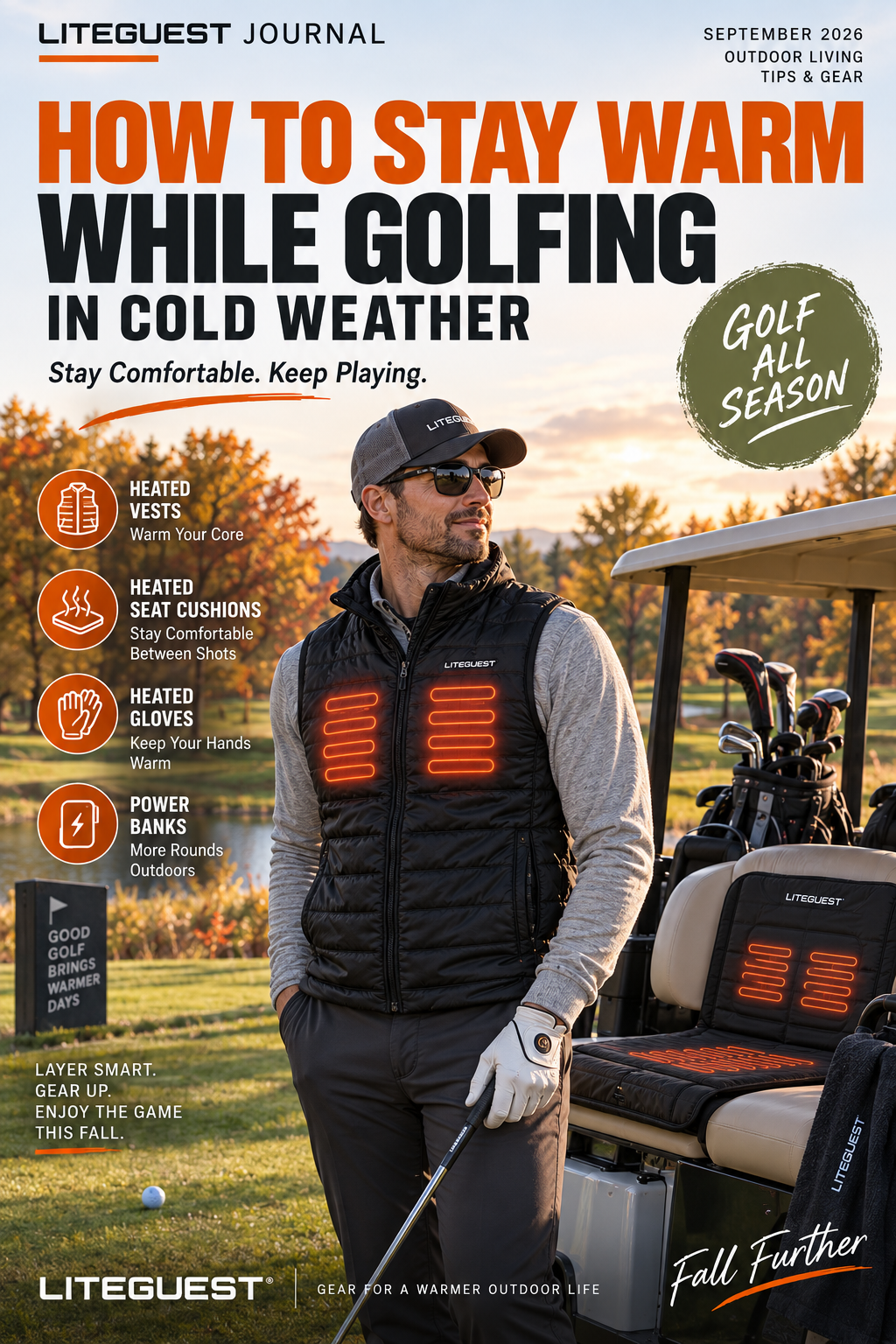
Golf requires freedom of movement through your shoulders and arms, making a heated vest a natural choice.
It can provide core warmth during cool mornings without adding unnecessary bulk around your swing.
For additional comfort while sitting between shots, a heated golf cart seat cushion can complement a heated vest.
Hiking
Usually a Heated Vest
Hiking generates body heat through continuous movement, so targeted core warmth can be useful without adding excessive coverage.
A vest also works well with a lightweight outer shell when wind or rain becomes a concern.
Fishing
It Depends
Active fishing can favor a heated vest because it provides warmth while maintaining arm mobility.
If you spend long periods sitting or standing still during cold mornings, a heated jacket may provide the additional coverage you need.
Hunting
Usually a Heated Jacket
Hunting can involve extended periods of limited movement.
When you spend significant time sitting or standing in cold conditions, broader coverage can become more important than maximum mobility.
A heated jacket can be combined with other cold-weather layers depending on the environment.
Camping
It Depends on the Conditions
For fall camping, a heated vest can be a versatile option during active daytime activities.
For colder camping conditions or extended time outside at night, a heated jacket can provide more coverage.
Your sleeping system should still provide the primary insulation needed for overnight conditions.
Outdoor Work
Usually a Heated Jacket
Outdoor work can expose you to cold conditions for several hours.
When you need consistent coverage rather than maximum mobility, a heated jacket may be the more practical choice.
Can You Wear a Heated Vest Under a Jacket?
Yes.
This is one of the biggest advantages of a heated vest.
A simple system can be:
Base Layer → Heated Vest → Weather-Resistant Jacket
The heated vest provides targeted warmth while the outer jacket helps protect against wind and weather.
This setup also gives you more control.
As temperatures change, you can adjust the heated vest, remove the outer layer, or add it back when conditions become colder.
For fall and early winter, this flexibility can make a heated vest extremely versatile.
What About Battery Life?
Both heated vests and heated jackets require a suitable power source, so battery performance should be part of your decision.
Before buying, consider:
- Power source compatibility
- Expected runtime
- Heat settings
- Charging requirements
- Length of your typical outdoor activity
If you regularly spend several hours outside, carrying a compatible portable power bank can provide additional flexibility.
For USB-powered heated gear, a compact power bank can also make it easier to manage your setup without carrying a separate bulky battery system.
Which Heated Apparel Should You Choose?
Use this simple decision guide:
Choose a Heated Vest If:
✓ Mobility matters
✓ You prefer flexible layering
✓ Temperatures change frequently
✓ You play golf or hike actively
✓ You want targeted core warmth
Choose a Heated Jacket If:
✓ You need more overall coverage
✓ You spend long periods outdoors
✓ Conditions are colder
✓ You hunt or camp in cold weather
✓ You work outdoors for extended periods
If you're still unsure, consider how much you move versus how long you remain stationary.
That is often a better starting point than simply looking at the temperature.
Heated Apparel Checklist
Before choosing either option, check:
✓ Heating Coverage
Does the heating area match where you typically feel cold?
✓ Heat Settings
Can you adjust the warmth as conditions change?
✓ Battery
Is the power source compatible with your activity?
✓ Fit
Can you move naturally and comfortably?
✓ Layering
Can the garment work with the rest of your outdoor clothing?
✓ Activity
Does it match how you actually spend time outdoors?
Key Takeaways
- Heated vests prioritize mobility and targeted core warmth.
- Heated jackets provide more overall upper-body coverage.
- Vests are particularly useful for golf, hiking, and active outdoor activities.
- Jackets can be better for colder conditions and extended outdoor exposure.
- A heated vest can be worn underneath an outer jacket for flexible layering.
- Battery compatibility and runtime matter for both types of heated apparel.
- The best choice depends on your activity, weather, movement, and layering system.
LITEGUEST Pro Tip
Don't choose heated apparel based on temperature alone. Choose it based on how you move.
If you're constantly moving, a heated vest may give you the warmth you need without restricting your activity.
If you're spending long periods standing or sitting in colder conditions, a heated jacket may provide the coverage you want.
Think about:
Movement + Coverage + Layering + Time Outdoors
Then choose the heated apparel that fits the way you actually spend your time outside.
Gear We Trust
LITEGUEST Heated Vests
Designed for targeted warmth and mobility across activities such as golf, hiking, fishing, camping, and other outdoor adventures.
LITEGUEST Heated Jackets
A broader-coverage option for colder conditions and longer periods outdoors.
LITEGUEST 20,000mAh Ultra-Compact Power Bank
A portable power option for compatible USB-powered heated gear when you need additional power during longer outdoor activities.
FAQs
Is a heated vest warmer than a heated jacket?
Not necessarily. A heated jacket generally provides more overall coverage, while a heated vest focuses more on targeted core warmth. Your perceived warmth will also depend on your layers, weather conditions, and activity.
Can you wear a heated vest under a jacket?
Yes. A heated vest can be layered underneath a weather-resistant jacket to provide targeted warmth while allowing you to adjust your outer layer as conditions change.
Should I get a heated vest or heated jacket?
Choose a heated vest if mobility, layering, and targeted core warmth are priorities. Choose a heated jacket if you need broader coverage or spend extended periods outdoors in colder conditions.
Choose the Warmth That Fits Your Adventure
There is no single heated garment that works perfectly for everyone.
A golfer preparing for a chilly morning may benefit from the mobility of a heated vest. A hunter waiting outdoors for extended periods may prefer the coverage of a heated jacket.
The right choice comes down to your activity, environment, and how you move.
Choose the coverage you need. Keep the mobility you want. Stay warm with LITEGUEST.
Continue Reading
Best Heated Vests for Fall: What to Look For
How to Stay Warm While Golfing in Cold Weather
Best Heated Gear for Fall Outdoor Activities