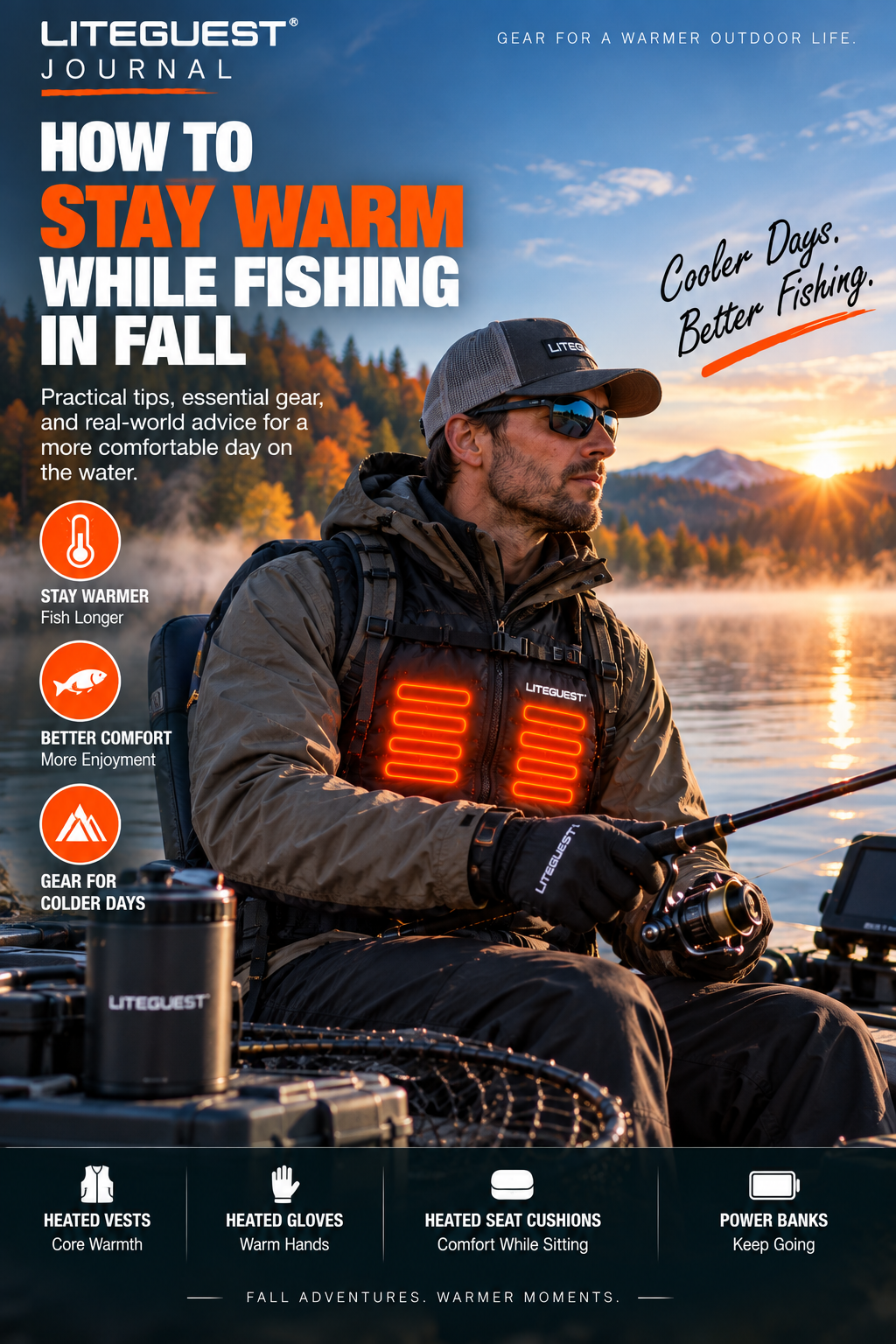

How to Stay Warm While Spending Long Hours Outdoors
Stay Warm. Keep Moving. Stay Outside.
Category: Outdoor Comfort
Reading Time: 5 min read
Updated: September 2026
Outdoor Moment
Some outdoor days are planned adventures.
Others simply happen because you need to be outside.
You might be setting up an outdoor event, maintaining a property, working around a campsite, making deliveries, preparing equipment, or spending a long morning outside before the day really gets started.
Whatever the reason, cold weather can become difficult when you cannot simply head indoors.
The challenge is not only staying warm.
You also need to stay comfortable enough to move, work, and keep going.
That is where a good layering system and targeted heated gear can make a difference.
Quick Take
The best way to stay warm during long hours outdoors is to combine flexible layers, targeted heated warmth, weather protection, and gear that lets you keep moving comfortably.
Think of your outdoor warmth system as:
Layer → Heat → Protect → Move
Start with a comfortable base layer, add insulation where needed, protect yourself from wind and moisture, and choose heated gear based on how you spend your time outside.
1. Start With a Flexible Layering System
Before reaching for heated gear, build a good foundation.
A simple layering system can include:
Base Layer → Mid Layer → Outer Layer
A base layer helps manage moisture next to your skin.
A mid layer adds insulation.
An outer layer helps protect you from wind and changing weather.
The advantage of layering is flexibility.
A cool morning can turn into a warmer afternoon, while a calm day can suddenly become windy.
Instead of relying on one heavy layer, you can adjust your clothing as conditions change.
2. Add Heated Warmth Where You Need It
Heated apparel can provide targeted warmth without requiring you to wear the heaviest possible clothing.
The right choice depends on how you move.
Heated Vest
A heated vest is useful when you need warmth around your core while keeping your arms relatively unrestricted.
It can work well for:
-
Outdoor setup
-
Landscaping
-
Property maintenance
-
Delivery routes
-
Event preparation
-
Walking between outdoor locations
-
General outdoor activities
For active outdoor use, the combination of core warmth + arm mobility can be particularly useful.
Heated Jacket
A heated jacket provides more overall coverage and can make sense when conditions are colder or you spend longer periods exposed to the elements.
It can be useful for:
-
Colder mornings
-
Extended outdoor exposure
-
Windy conditions
-
Less active periods
-
Winter outdoor activities
The decision does not have to be complicated:
More movement → Heated Vest
More coverage → Heated Jacket
For a more detailed comparison, see:
Heated Vest vs. Heated Jacket: Which One Is Right for You?
3. Keep Your Hands Warm and Functional
Cold hands can make almost any outdoor activity less comfortable.
And when you need your hands to actually do something, simply adding thicker gloves is not always the best solution.
You may need to:
-
Handle equipment
-
Carry supplies
-
Adjust controls
-
Use tools
-
Open zippers
-
Manage small objects
-
Set up outdoor gear
This is where heated gloves can provide targeted warmth while still allowing you to maintain useful hand movement.
The goal is:
Warm Hands + Dexterity + Grip
Your outdoor gear should help you stay comfortable without making everyday tasks more difficult.
4. Protect Yourself From Wind and Moisture
Cold temperatures are only part of the outdoor comfort equation.
Wind can make cool conditions feel much colder.
Moisture can make you lose comfort even faster.
That is why your outer layer matters.
Depending on the conditions, consider:
-
Wind-resistant outerwear
-
Water-resistant or weather-appropriate layers
-
A warm hat
-
Neck protection
-
Warm socks
-
Dry backup layers
You do not necessarily need the thickest clothing.
You need clothing that matches the conditions you will actually encounter.
5. Think About How You Spend Your Time Outdoors
Not everyone experiences cold weather in the same way.
Someone walking around outdoors for several hours has different needs from someone sitting in one location.
If You're Moving Frequently
Prioritize:
Mobility + Core Warmth
A heated vest can be a flexible option.
If You're Outside in Colder Conditions
Prioritize:
Coverage + Weather Protection
A heated jacket may make more sense.
If Your Hands Are Constantly Working
Prioritize:
Warmth + Dexterity
Heated gloves can help.
If You Spend Long Periods Sitting
Prioritize:
Targeted Comfort
A heated seat cushion can add warmth without requiring another bulky clothing layer.
This approach is useful because outdoor comfort is not simply about the temperature on the weather app.
It is about what you are actually doing outside.
6. Prepare for the Entire Day
Outdoor conditions can change significantly between morning and afternoon.
Instead of preparing for only the coldest moment, think about the entire day.
Morning
Start with your full layering system and heated gear if needed.
Midday
Remove a layer or reduce heat as conditions become more comfortable.
Afternoon
Add warmth again if temperatures begin to fall.
Evening
Have your outer layer and power source ready before the temperature drops.
For USB-powered heated gear, a compatible portable power bank can provide additional flexibility during longer days outside.
A little preparation can make it easier to adapt instead of carrying one oversized layer all day.
What Is the Best Way to Stay Warm Outdoors?
There is no single piece of outdoor gear that works for everyone.
The best approach is to build a system around your activity.
For active outdoor use:
Choose flexible layers and a heated vest.
For colder conditions:
Consider broader coverage with a heated jacket.
For cold hands:
Add heated gloves.
For long periods sitting outdoors:
Consider a heated seat cushion.
For changing weather:
Carry an appropriate outer layer and an extra dry layer.
The goal is not maximum clothing.
It is the right combination of warmth, mobility, and protection.
Cold-Weather Outdoor Comfort Checklist
Before spending a long day outside, consider packing:
✓ Moisture-Managing Base Layer
✓ Heated Vest or Heated Jacket
✓ Heated Gloves
✓ Weather-Appropriate Outer Layer
✓ Warm Socks
✓ Hat or Neck Layer
✓ Portable Power Bank
✓ Extra Dry Layer
✓ Heated Seat Cushion
You may not need everything on every trip.
Choose the pieces that match the activity and expected conditions.
Key Takeaways
-
Layering gives you more flexibility than relying on one heavy garment.
-
Heated vests provide targeted core warmth while maintaining arm mobility.
-
Heated jackets provide broader coverage for colder conditions.
-
Heated gloves can keep hands warm while maintaining useful dexterity.
-
Wind and moisture protection are important during long periods outdoors.
-
A heated seat cushion can add targeted comfort when you spend extended periods sitting.
-
Portable power can help support compatible USB-powered heated gear.
-
The best outdoor warmth system depends on how you move, how long you stay outside, and the conditions you face.
LITEGUEST Pro Tip
Dress for what you're doing outside—not just the temperature outside.
A 45°F morning can feel completely different when you're hiking, setting up equipment, sitting beside a lake, or standing outside for several hours.
Think about four things:
Movement + Coverage + Weather + Time
Then build your outdoor gear around them.
That approach gives you more flexibility than simply choosing the warmest-looking jacket.
Gear We Trust
LITEGUEST Heated Vests
A flexible option for targeted core warmth during active outdoor activities and long days outside.
LITEGUEST Heated Jackets
A broader-coverage option for colder conditions and extended outdoor exposure.
LITEGUEST Heated Gloves
Designed to add targeted warmth while keeping your hands useful for outdoor tasks and activities.
LITEGUEST Heated Seat Cushions
A portable comfort option for long periods of sitting outdoors, from outdoor events to vehicle-based activities and other cold-weather situations.
LITEGUEST 20,000mAh Ultra-Compact Power Bank
A portable power option for compatible USB-powered heated gear when you need additional flexibility during longer outdoor days.
FAQs
How do you stay warm when spending all day outside?
Start with moisture-managing layers, add insulation, use heated gear where you need targeted warmth, and protect yourself from wind and moisture. Your activity level and time outdoors should determine how much coverage you need.
Is a heated vest good for outdoor activities?
Yes. A heated vest can provide targeted core warmth while leaving your arms relatively unrestricted, making it useful for many active outdoor activities and long days outside.
What should I wear when working or spending time outdoors in cold weather?
A flexible layering system is a good starting point. Depending on the conditions and activity, you can add a heated vest or jacket, heated gloves, weather-appropriate outerwear, warm socks, and other accessories.
Stay Comfortable Wherever the Outdoors Takes You
Cold weather does not always mean staying inside.
Sometimes the day still calls for a walk, a project, an outdoor event, a morning on the water, or simply more time outside.
The key is to build your gear around the way you actually spend that time.
Layer for flexibility.
Add heat where you need it.
Protect against the elements.
Keep moving.
Stay warm. Stay outside with LITEGUEST.