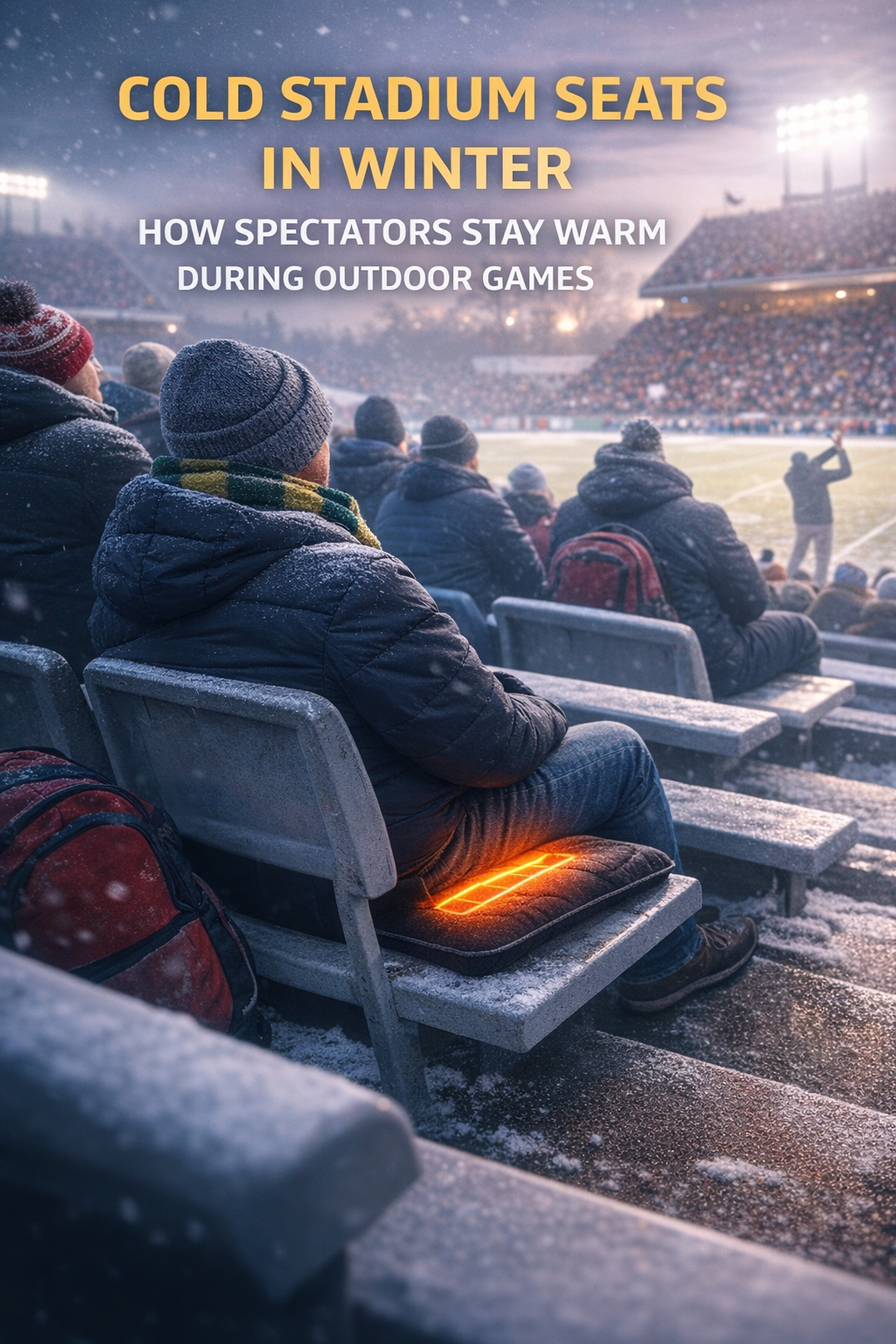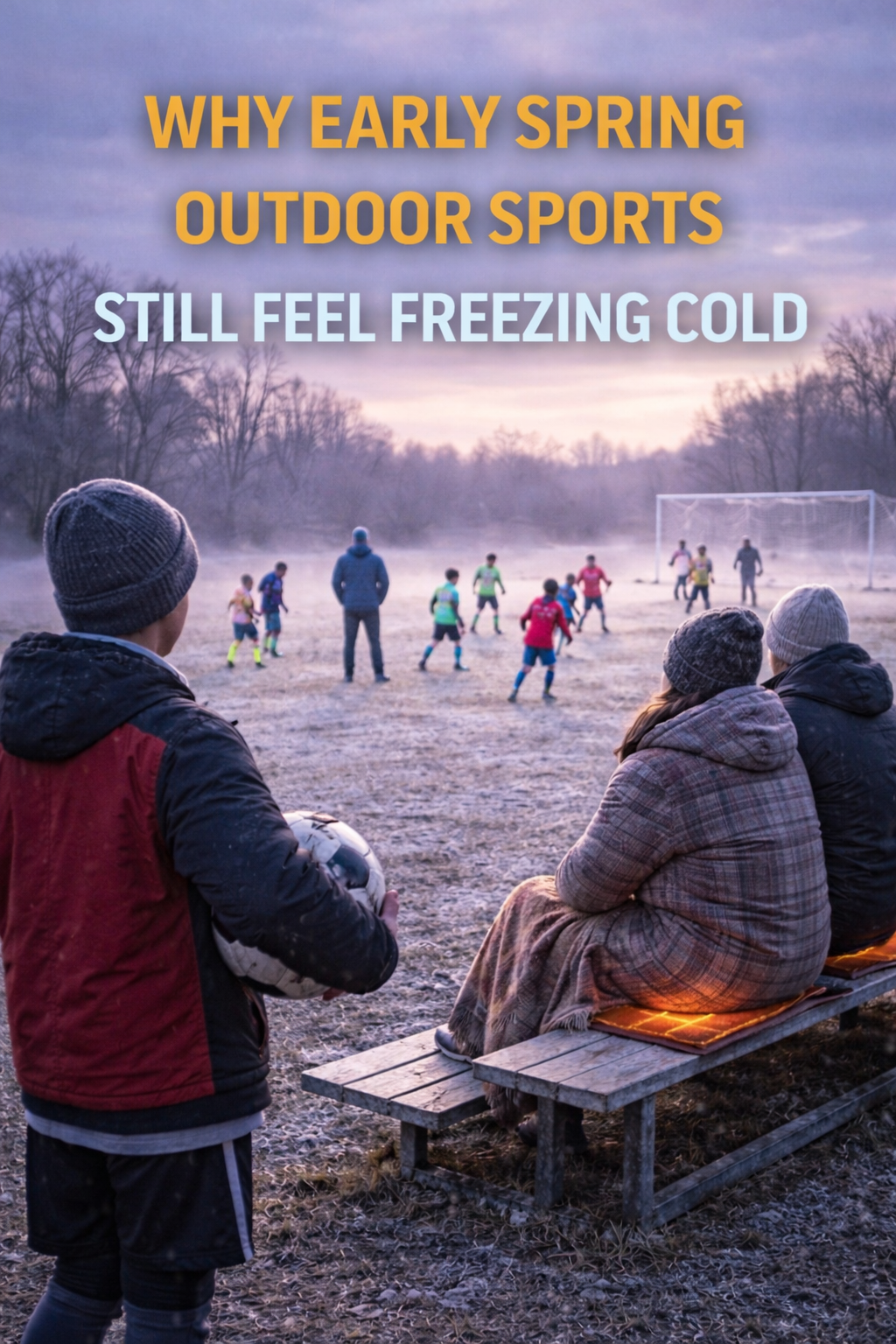

Early morning golf in cold weather feels very different from a mid-day round.
Even on clear days, temperatures on U.S. golf courses are often lowest just after sunrise, especially in open fairways and shaded tee areas.
Most golfers notice the cold not while swinging, but while sitting still — waiting at the tee, riding in the cart, or watching from the stands. Once movement stops, body heat drops quickly, and cold air combined with ground temperature makes the chill feel worse than expected.
Why sitting still feels colder on the golf course
When you sit, your body loses heat through direct contact with cold surfaces such as benches, carts, or damp grass.
At the same time, reduced movement lowers blood circulation, making it harder for your body to stay warm.
This is why golfers often feel fine during warm-ups but uncomfortable just a few holes into an early morning round. The issue isn’t clothing alone — it’s where heat escapes first.
Why layering alone isn’t always enough
Many golfers add jackets or thermal layers for cold weather golf, but upper-body insulation doesn’t fully solve the problem when sitting.
Cold transfers upward from the seat and ground, cooling the core even when arms and shoulders are covered.
Focusing on contact-area warmth — especially where the body touches cold surfaces — helps maintain comfort without adding bulk or restricting movement.
Practical ways golfers stay warm during early rounds
On U.S. courses, experienced cold-weather golfers adjust their routine by:
-
Staying off cold benches when possible
-
Limiting long sitting periods between shots
-
Using portable warmth solutions designed for outdoor seating
-
Timing warm-ups closer to tee time to retain heat
These small adjustments help maintain body temperature without changing swing mechanics or comfort.
Staying comfortable without affecting performance
The goal of staying warm during early morning golf isn’t overheating — it’s temperature stability.
When the body stays comfortable, focus improves, grip feels more consistent, and the round feels less physically draining.
Cold weather golf doesn’t have to shorten your season. With the right understanding of heat loss and smart comfort strategies, early morning rounds can stay enjoyable even in low temperatures.