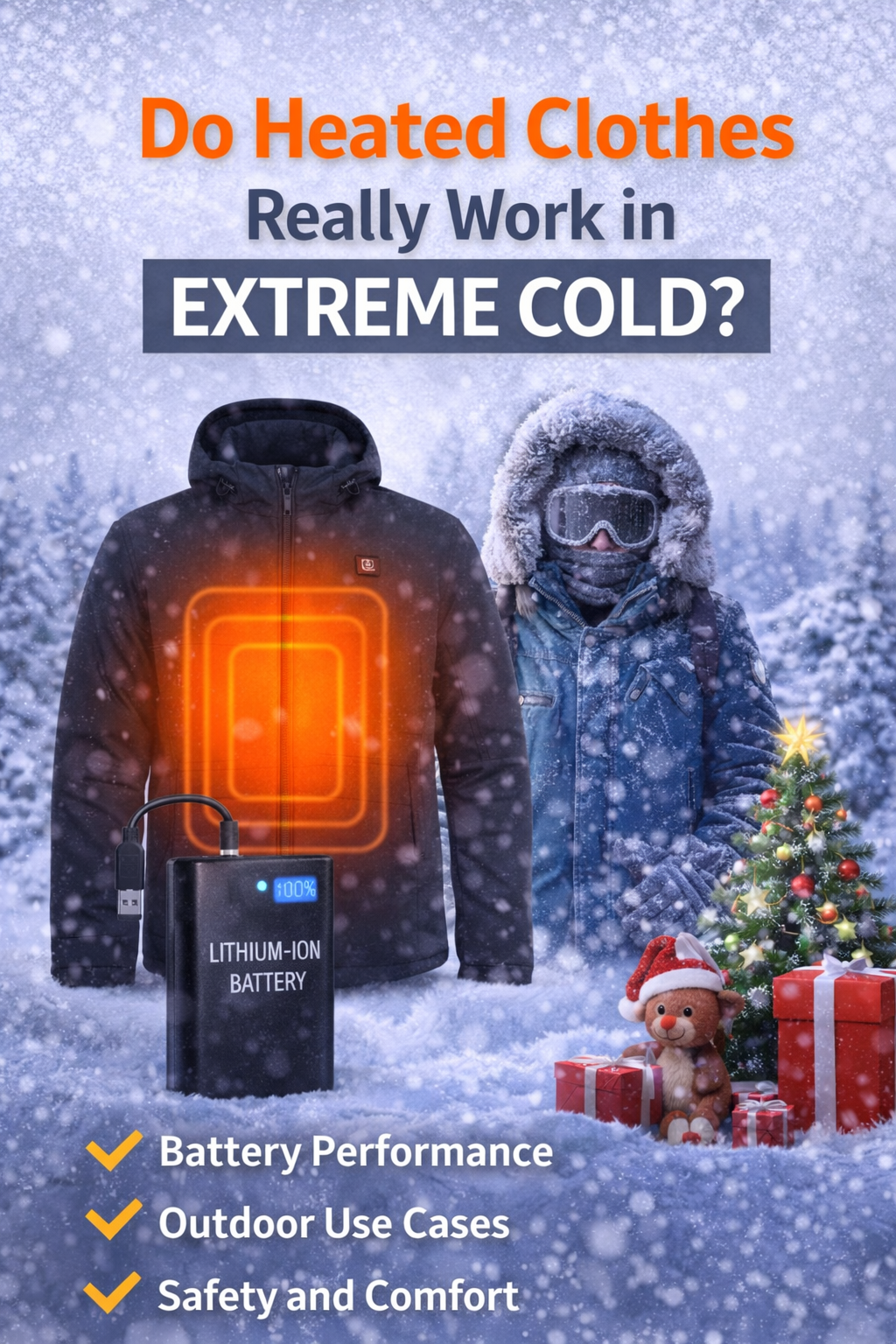

When winter temperatures drop, choosing the right heated gear can make the difference between enjoying the outdoors and cutting your trip short. From heated jackets and pants to heated seat cushions and accessories, modern heated gear is designed to support comfort, safety, and performance in cold environments. But how do you choose the right heated gear for your specific outdoor activities?
This guide breaks down the key factors to consider before buying heated gear, helping you make a smart, long-term investment for outdoor use.
1. Match Heated Gear to Your Outdoor Activity
Different outdoor activities demand different heating solutions.
For low-movement activities like camping, fishing, golfing, or sitting in stadium stands, heated seat cushions, heated blankets, or mid-layer heated jackets work best. These provide steady warmth without restricting movement.
For high-movement activities such as skiing, hiking, snowmobiling, or outdoor work, lightweight heated jackets or heated pants with flexible heating zones are ideal. These maintain warmth while allowing full mobility.
Always choose heated gear designed for outdoor sports, not indoor-only heating products.
2. Heating Zones Matter More Than Heat Level
More heat doesn’t always mean better performance. Strategic heating zones are far more important.
High-quality heated gear focuses on:
-
Core areas (chest, back, lower back)
-
Key circulation zones (thighs, knees, seat)
-
Targeted warmth instead of full-surface overheating
This design helps your body retain natural heat and reduces battery consumption.
3. Battery Compatibility and Power Options
Battery choice directly affects usability outdoors.
Look for heated gear that supports:
-
USB-powered lithium-ion batteries
-
Standard power banks (easy replacement)
-
Multiple heat levels for power control
Outdoor-focused heated gear should allow you to swap batteries quickly without removing layers, especially in cold or windy conditions.
4. Weather Resistance Is Essential
Outdoor heated gear must handle more than just cold.
Choose products that are:
-
Water-resistant or waterproof
-
Wind-resistant
-
Durable against snow, light rain, and moisture
This is especially important for heated jackets, pants, and seat cushions used in unpredictable outdoor environments.
5. Safety Features You Should Never Skip
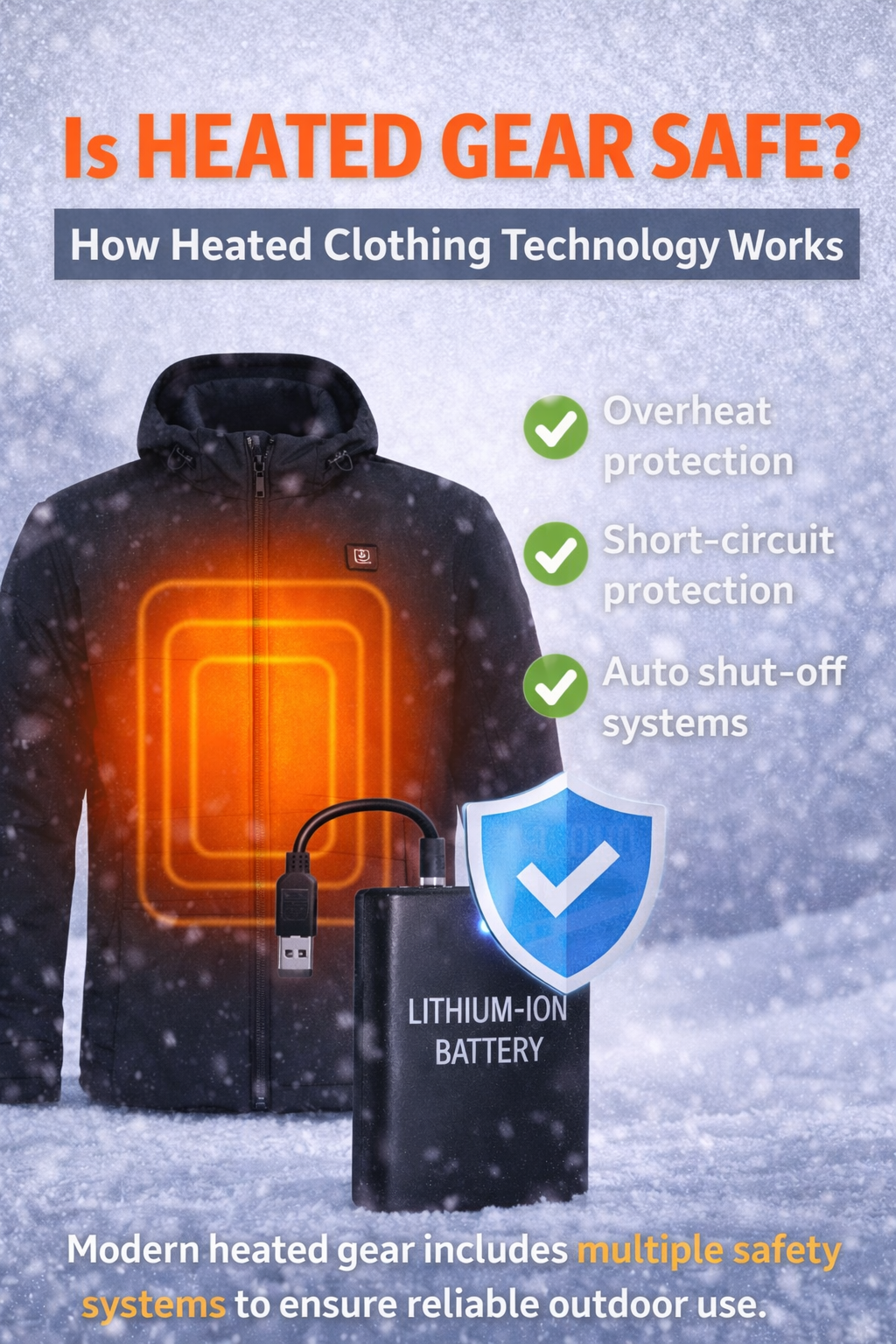
Modern heated gear is safe when designed correctly.
Essential safety features include:
-
Overheat protection
-
Short-circuit protection
-
Auto shut-off systems
These features protect both the user and the battery, ensuring reliable use during extended outdoor trips.
6. Fit, Layering, and Comfort
Heated gear should fit comfortably over or under other layers.
Avoid gear that is too tight, as it restricts heat circulation. At the same time, overly bulky designs can limit movement. The best heated gear integrates seamlessly into your existing outdoor layering system.
Choosing the right heated gear isn’t about buying the most powerful option—it’s about selecting the right combination of heating zones, battery efficiency, safety, and outdoor durability.
When chosen correctly, heated gear becomes an essential part of your winter outdoor setup, allowing you to stay warm, active, and comfortable in cold conditions.