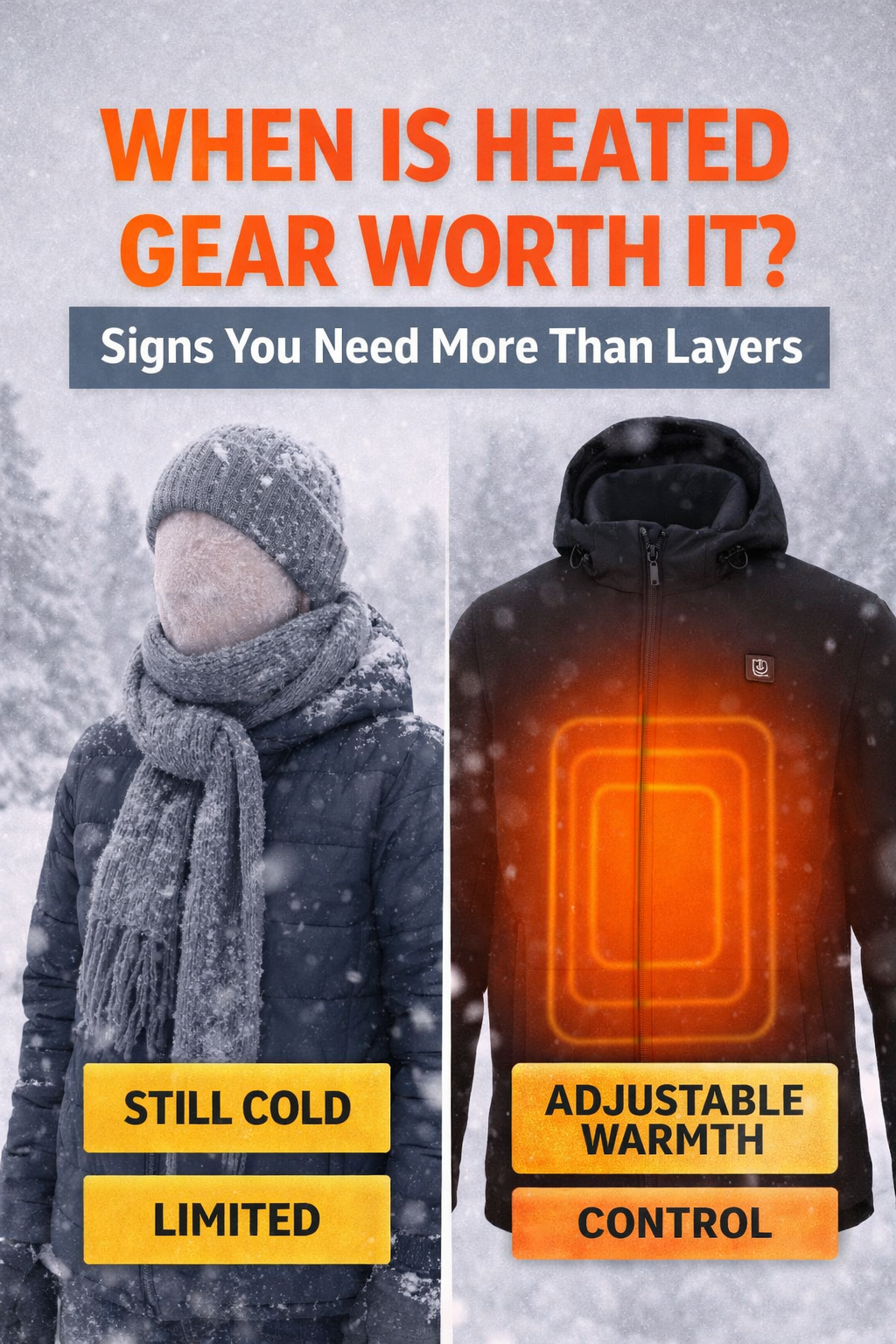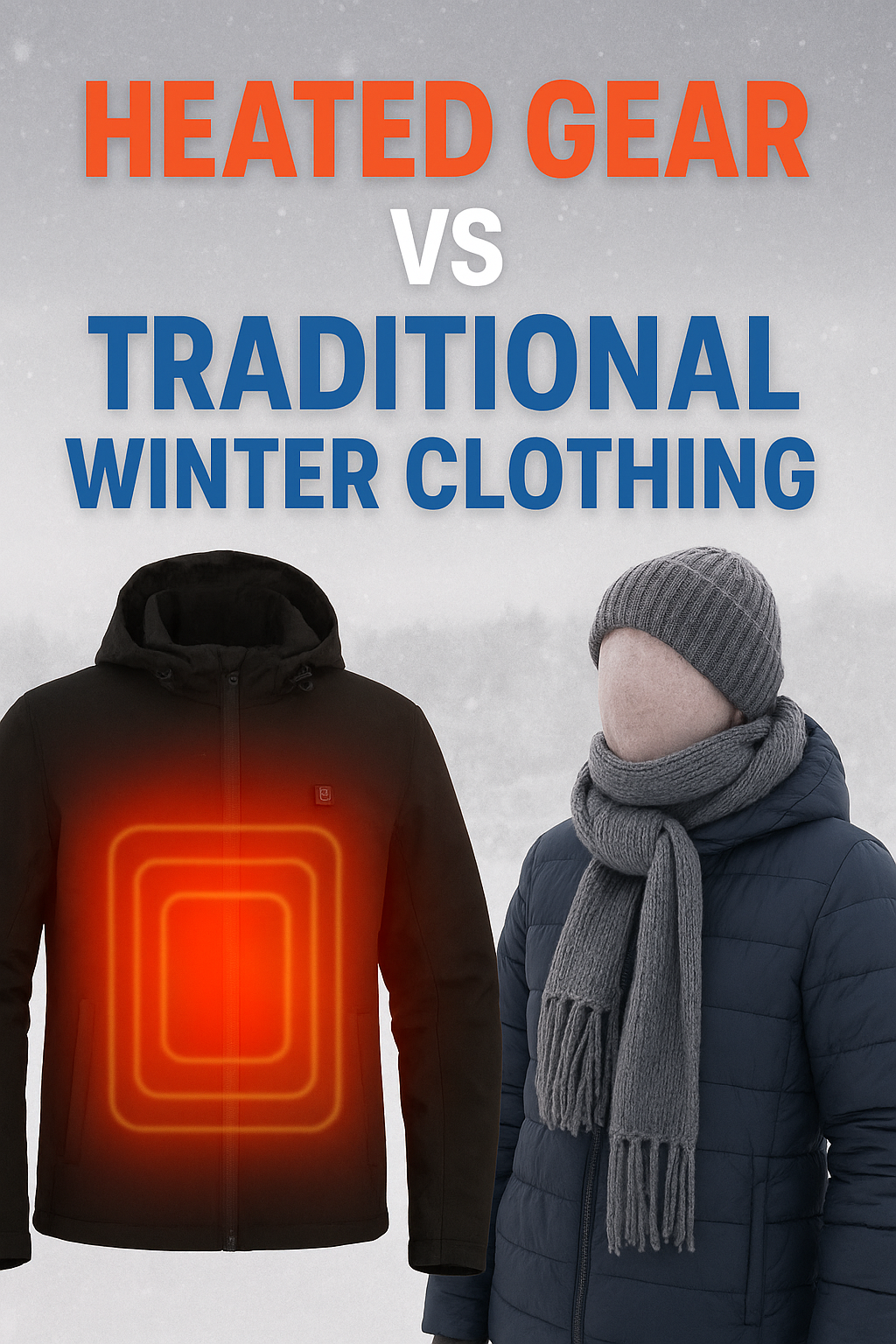

Heated gear has become a popular solution for staying warm outdoors in winter—but not all heated apparel is designed for the same purpose. Choosing the right heated gear depends heavily on how you spend time outdoors, how active you are, and what kind of cold conditions you face.
This guide explains how to select heated gear based on real winter activities, helping you stay warm without over-layering or sacrificing mobility.
Why Activity Type Matters When Choosing Heated Gear
Cold affects the body differently depending on movement level.
Someone hiking uphill generates heat quickly, while someone ice fishing remains still for hours. Wearing the wrong heated gear for the wrong activity often leads to overheating, battery waste, or insufficient warmth.
Before choosing heated apparel, consider:
-
How active you’ll be
-
How long you’ll stay outdoors
-
Wind exposure and moisture
-
Whether you’ll stop and start frequently
Matching heated gear to activity is the key to comfort.
Heated Gear for Hiking and Trekking
Hiking generates body heat, especially on climbs. The biggest challenge is temperature fluctuation—getting warm while moving, then cold during breaks.
Best choices for hiking:
-
Heated vests (core warmth without bulk)
-
Lightweight heated jackets with adjustable settings
Why it works:
A heated vest stabilizes core temperature while allowing arms to move freely. Lower heat settings are usually enough, conserving battery life while preventing chills during rest stops.
Heated Gear for Skiing and Snowboarding
Skiers and snowboarders face strong wind chill, especially on lifts. Even with insulated jackets, hands and feet often get cold first.
Best choices for skiing:
-
Heated gloves or mittens
-
Heated socks or insoles
-
Optional heated mid-layer for extreme cold
Why it works:
Heated gloves and socks provide consistent warmth during long lift rides and prevent numbness without adding bulky layers inside boots.
Heated Gear for Fishing, Hunting, and Camping
These activities involve long periods of inactivity. Traditional insulation alone struggles here.
Best choices for low-movement activities:
-
Heated jackets or parkas
-
Heated pants
-
Heated gloves and socks
Why it works:
Since the body isn’t generating heat, active heating becomes essential. Higher heat settings are often used, and battery capacity becomes more important.
Heated Gear for Cycling and Motorcycling
Wind exposure dramatically increases heat loss, even at moderate temperatures.
Best choices:
-
Heated jackets or liners
-
Heated gloves
-
Heated socks for long rides
Why it works:
Heated layers create a stable warmth barrier beneath windproof outer shells, preventing rapid heat loss caused by airflow.
Heated Gear for Everyday Winter Use
Not all heated gear is for extreme adventures. Many people use heated apparel for daily routines.
Best choices:
-
Heated vests for commuting
-
Heated gloves for walking or travel
-
Heated socks for standing long hours outdoors
Why it works:
Low-profile heated gear integrates easily into everyday clothing without drawing attention or requiring heavy outerwear.
Key Factors to Consider Before Buying Heated Gear
Regardless of activity, consider these essentials:
1. Heating Zones
Look for heated gear that warms the core or extremities first—these areas lose heat fastest.
2. Heat Levels
Multiple heat settings allow better control and battery efficiency.
3. Battery Life
Longer outdoor sessions require higher-capacity batteries.
4. Layer Compatibility
Heated gear should work as part of a layering system, not replace weather protection.
Choosing Smarter Means Staying Outdoors Longer
Heated gear is most effective when chosen intentionally. Instead of buying the warmest option available, match the gear to your activity level and environment.
When used correctly, heated apparel improves comfort, conserves energy, and allows you to enjoy winter outdoors longer—without constantly adjusting layers or cutting trips short.